
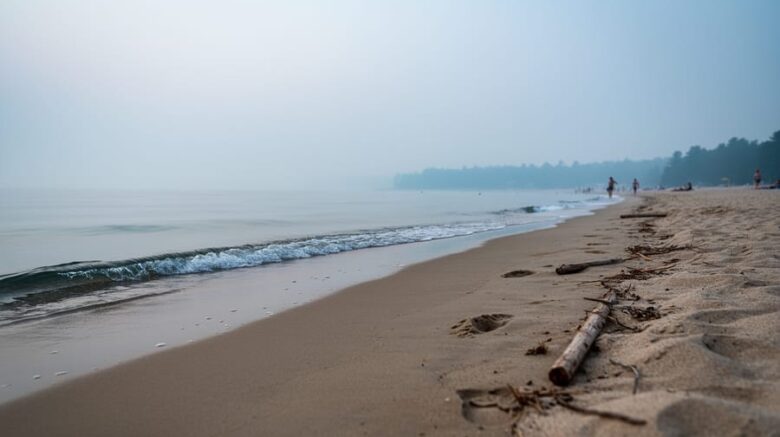
As of July 21, 2026, Sauble Beach is experiencing moderate air quality with an AQI of 91, primarily driven by PM2.5 particles from wildfire smoke drifting south from northwestern Ontario. If you’re planning a beach day or already noticing hazy skies, here’s what that number means for your health: most visitors can enjoy outdoor activities as usual, but anyone with asthma, COPD, or other respiratory conditions should scale back prolonged or strenuous exercise.
The timing couldn’t be more frustrating for summer visitors. Sauble Beach draws thousands to its pristine shores each season, yet wildfire smoke has become an unwelcome regular on the Great Lakes coast. The smoke reduces visibility and carries fine particulate matter that penetrates deep into lungs, making real-time monitoring essential before you pack the car.
Canada’s Air Quality Health Index uses a four-tier system: Low risk (1-3), Moderate risk (4-6), High risk (7-10), and Very high risk. Environment and Climate Change Canada updates forecasts daily at 5:00 PM EDT through its National Air Pollution Surveillance program, which tracks pollutants at monitoring stations nationwide. Multiple data sources, including the Copernicus Atmosphere Monitoring Service and Finland’s SILAM system, feed these readings to give you accurate, hyperlocal conditions.
Understanding what drives poor air quality at Sauble Beach connects to broader climate patterns reshaping our summers. Longer fire seasons and shifting wind patterns mean smoke events that were once rare now arrive multiple times each year, affecting not just outdoor recreation but long-term respiratory health for residents and repeat visitors alike.
Understanding the Current Air Quality Index at Sauble Beach
The AQI 91 reading at Sauble Beach falls into the Moderate category, which means air quality is acceptable for most people but may pose concerns for those unusually sensitive to air pollution. PM2.5, fine particulate matter measuring 2.5 micrometers or smaller, is driving this reading. These particles come from wildfire smoke and can penetrate deep into your lungs, which is why understanding what Moderate actually means matters before you pack your beach bag.
Canada uses the Air Quality Health Index rather than the standard U.S. AQI system, though many weather services translate readings for easier comparison. The AQHI runs on a scale designed to help you quickly assess health risk:
| Risk Level | Index Range | Health Implications |
|---|---|---|
| Low risk | 1-3 | Ideal conditions for outdoor activities |
| Moderate risk | 4-6 | Acceptable for most; sensitive groups should consider reducing prolonged exertion |
| High risk | 7-10 | Reduce or reschedule strenuous outdoor activities, especially for at-risk groups |
| Very high risk | Above 10 | Avoid strenuous outdoor activities; everyone may experience health effects |
For beachgoers, this matters more than you might think. While lounging on the sand carries minimal risk, activities like beach volleyball, swimming laps, or running along the shoreline increase how much air you breathe and how deeply you inhale. PM2.5 particles bypass your body’s natural filters and settle in lung tissue. Children breathe faster relative to their size, older adults may have reduced lung capacity, and anyone with asthma or heart conditions faces heightened sensitivity.
The current Moderate rating means most visitors can enjoy Sauble Beach with reasonable precautions rather than canceling plans entirely. If you notice eye irritation, coughing, or unusual shortness of breath during physical activity, those are signals to dial back intensity or take breaks indoors. The conditions represent a manageable risk, not a crisis, but awareness helps you protect your health while still making the most of your visit.
Why Wildfire Smoke Is Affecting Southern Ontario Beaches
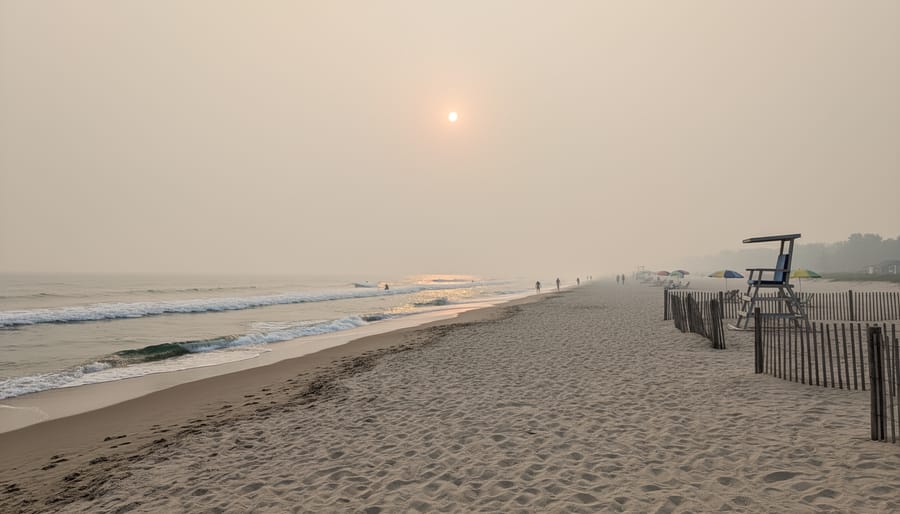
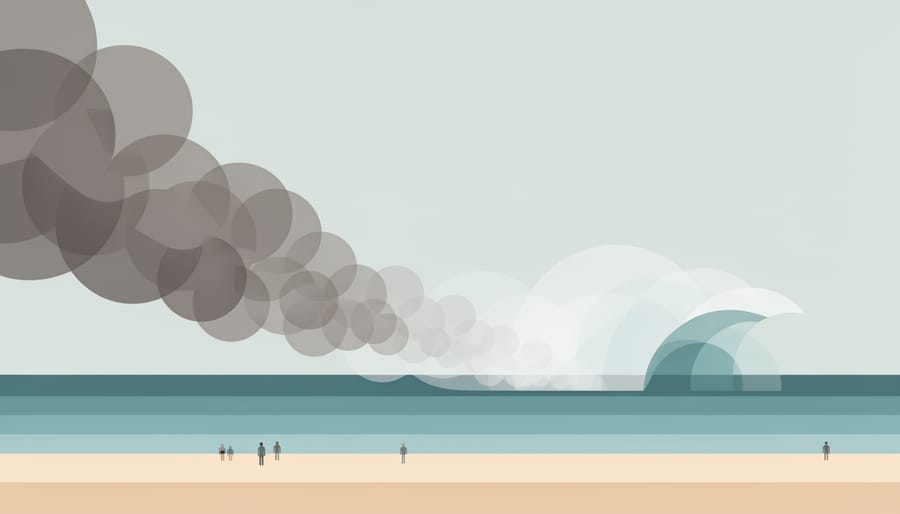
Wildfire smoke doesn’t respect boundaries. When forests burn in northwestern Ontario, the resulting plumes can travel hundreds of kilometers on prevailing winds, carrying fine particulate matter across the province. That’s what’s happening now at Sauble Beach, where smoke from distant fires has degraded air quality despite no local fires in the area.
The journey happens through atmospheric circulation patterns. Smoke particles, particularly PM2.5 (particles smaller than 2.5 micrometers), rise into the atmosphere and get carried by wind currents. These particles are light enough to remain airborne for days, drifting southward and eastward across Ontario. As they move, they gradually settle into lower atmospheric layers, affecting ground-level air quality in regions far from the original fire source.
Geography plays a role too. The Great Lakes region experiences weather patterns that can trap or channel smoke. When high-pressure systems stall over an area, they prevent smoke from dispersing upward, keeping it concentrated near the surface where people breathe it. This creates the hazy conditions and reduced visibility that accompany poor air quality days at beaches and urban centers alike.
Climate change has intensified this cycle. Warmer temperatures dry out forests earlier in the season and extend fire weather into late summer. Drought conditions, which are becoming more frequent, create tinderbox landscapes where fires ignite more easily and burn more intensely. Research shows wildfire seasons in Canada have lengthened significantly over recent decades, with more hectares burned annually than historical averages.
The result is a feedback loop: fossil fuel emissions drive climate change, which increases wildfire frequency and severity, which in turn degrades air quality across wider regions for longer periods. Events like the current smoke impact at Sauble Beach aren’t isolated incidents anymore, they’re becoming a recurring summer pattern. Transitioning to renewable energy sources helps address the root cause by reducing the greenhouse gas emissions that fuel these changes.
Health Recommendations for Visitors and Residents
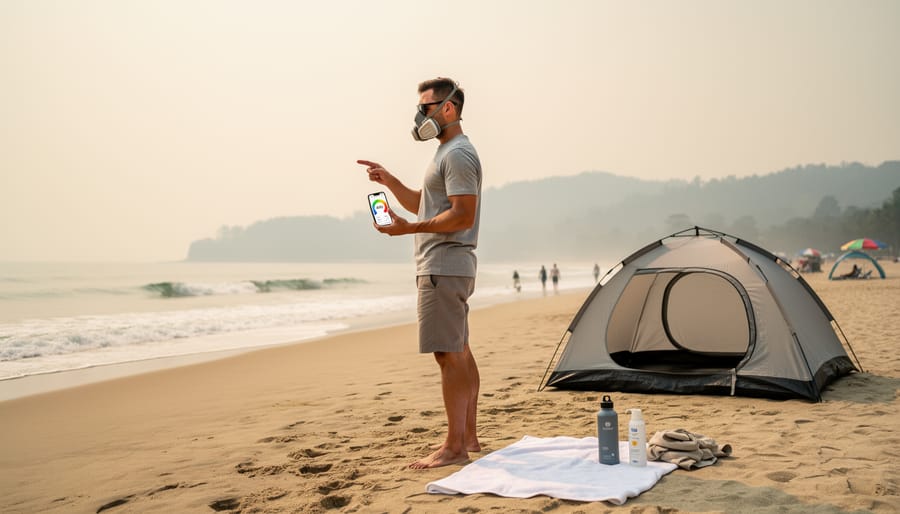
At an Air Quality Index of 91 (Moderate), most healthy adults and children can enjoy Sauble Beach without significant concerns, but certain groups need to take extra precautions. People with asthma, chronic obstructive pulmonary disease, or other respiratory conditions are more sensitive to PM2.5 particles from wildfire smoke and may experience symptoms even at moderate levels. Children and older adults also face increased vulnerability because their lungs are either still developing or have reduced capacity to filter fine particulate matter.
If you have respiratory issues, the official guidance is clear: reduce prolonged or heavy outdoor exertion. This means choosing lighter activities over strenuous exercise and taking frequent breaks if you notice any discomfort. A leisurely beach walk or gentle swimming session is generally fine, but now is not the time to run sprints on the sand or engage in intense beach volleyball tournaments. Pay attention to your body. If you start coughing, experience shortness of breath, feel chest tightness, or notice throat irritation, move indoors to a space with filtered air.
Pregnant individuals should also exercise caution during moderate air quality days, as emerging research suggests that exposure to fine particulate matter may affect both maternal and fetal health. When in doubt, err on the side of shorter outdoor visits with more indoor breaks.
For those planning a beach day during these conditions, a few practical adjustments make a real difference:
- Schedule outdoor activities for early morning or evening when smoke concentrations are typically lower
- Have indoor backup plans ready, such as visiting air-conditioned museums, restaurants, or shopping areas if conditions worsen
- Watch for symptoms like eye irritation, persistent cough, or unusual fatigue, and head indoors if they appear
- Drink more water than usual, as hydration helps your body process irritants and supports respiratory function
Healthy visitors without pre-existing conditions can generally proceed with normal beach activities, but everyone benefits from staying aware. Check how you feel throughout the day. If the smoke becomes visibly thick or you can smell it strongly, that is your cue to limit time outdoors regardless of the numerical AQI reading. The combination of sun exposure and air pollution can be more taxing than either factor alone, so pace yourself and listen to your body’s signals.
Parents should keep a closer eye on children during moderate air quality days. Kids often do not recognize or communicate early symptoms, and they breathe faster than adults relative to their body size, which means they inhale more polluted air per pound of body weight. If your child seems unusually tired, irritable, or complains of a sore throat, take a break indoors.
How Air Quality Is Monitored and Reported in Canada
Canada’s air quality monitoring relies on a comprehensive network of ground-based stations operated through the National Air Pollution Surveillance program. This network measures pollutant concentrations at strategic locations across the country, including areas near popular destinations like Sauble Beach. The monitoring stations use sophisticated sensors that continuously measure particles and gases in the air, with particular attention to PM2.5 (fine particulate matter) and other pollutants that affect human health.
The data you see when checking Sauble Beach conditions comes from multiple sources. Environment and Climate Change Canada operates the primary monitoring infrastructure and issues official forecasts using the Air Quality Health Index system. These forecasts are updated at 5:00 pm EDT each day, providing predictions for the current day and the following day based on measured pollutant levels and atmospheric modeling.
Beyond the national network, air quality reporting also incorporates data from international atmospheric monitoring systems. The Copernicus Atmosphere Monitoring Service, operated by the European Centre for Medium-Range Weather Forecasts, provides satellite observations and atmospheric modeling that track pollutant transport across large distances. This becomes particularly valuable during wildfire events when smoke travels hundreds of kilometers from its source. Some platforms also use information from SILAM, the System for Integrated modeLling of Atmospheric coMposition developed by the Finnish Meteorological Institute, which specializes in modeling how pollutants disperse through the atmosphere.
This multi-layered approach combines ground measurements with satellite data and atmospheric modeling to give you accurate, up-to-date information about the air you’re breathing. When smoke from northwestern Ontario reaches southern beaches, these systems work together to detect the change and update public health recommendations accordingly.
Checking Real-Time Air Quality Before Your Beach Trip
Before heading to Sauble Beach, check current conditions through reliable, official sources that update throughout the day. Environment and Climate Change Canada provides the most authoritative Air Quality Health Index data for Canadian locations, pulling measurements from the National Air Pollution Surveillance program’s monitoring stations. Their forecasts update at 5:00 pm EDT daily, giving you evening readings to plan the next day’s activities.
To get a complete picture of air quality conditions:
- Visit Environment Canada’s official AQHI page and search for Sauble Beach or the nearest monitoring station to see the current health risk category (Low, Moderate, High, or Very High)
- Check the dominant pollutant, during wildfire events, PM2.5 particles are typically the main concern and warrant extra caution for sensitive groups
- Review the hourly and next-day forecast to see if conditions are improving or worsening, which helps you decide whether to visit in the morning versus afternoon
- Compare readings from multiple weather services like Weather Underground for additional context, keeping in mind these platforms aggregate data from sources including Copernicus Atmosphere Monitoring Service
If you’re planning a full beach day, check again in the morning before leaving home. Air quality can shift quickly when wind patterns change or smoke plumes move. During moderate conditions like the current AQI 91 reading, early morning often offers clearer air before temperatures rise and pollutants accumulate. Setting up weather alerts on your phone ensures you’ll receive notifications if conditions deteriorate to high risk levels, letting you adjust your plans without constantly monitoring readings.
The Bigger Picture: Climate Change and Air Quality Events
Today’s air quality concerns at Sauble Beach reflect a troubling pattern scientists have documented across Canada and beyond. What was once an occasional summer event has become increasingly common. The wildfire smoke drifting south from northwestern Ontario is not an isolated incident but part of a broader shift in how our climate system functions.
Canada has experienced a dramatic increase in wildfire activity over the past two decades. Warmer temperatures dry out forests earlier in the season and extend the fire risk window well into autumn. When summer extreme weather brings prolonged heat and drought, vegetation becomes tinderbox-dry, creating conditions for larger, more intense fires that burn longer and produce massive smoke plumes. These fires now routinely affect air quality hundreds of kilometers away from the burn sites, turning what should be pristine beach days into moderate or poor air quality alerts.
The connection between greenhouse gas emissions and these events is direct. Carbon dioxide and methane trap heat in our atmosphere, driving the temperature increases that create ideal wildfire conditions. Every tonne of CO2 we emit contributes to this cycle. This is why transitioning away from fossil fuels matters beyond abstract environmental goals. Each wind turbine generating clean electricity, each solar panel powering a home, and each electric vehicle on the road represents a tangible reduction in the emissions driving these changes.
Breaking this cycle requires collective action. Supporting renewable energy infrastructure, advocating for stronger climate policies, and making sustainable choices in our daily lives all play a role. The air quality challenges affecting your beach visit today are a reminder that climate change is not a distant threat. It is happening now, and our response will determine whether events like this become the exception or the norm.
Monitoring air quality at Sauble Beach isn’t just about one moderate air quality day, it’s about building awareness of how environmental conditions affect our daily lives. When wildfire smoke travels hundreds of kilometers to impact southern Ontario beaches, it reveals the interconnected nature of our climate and air quality challenges. Checking current AQI readings before heading to the beach is now as essential as checking the weather forecast.
The moderate air quality conditions we’re seeing today underscore a larger reality: climate change is increasing wildfire frequency and intensity across Canada, creating more frequent air quality events. Every smoky day at the beach reminds us why transitioning to cleaner energy sources matters. Supporting wind energy and other renewable power reduces the emissions contributing to climate change, which in turn can help reduce the severity and frequency of these air quality disruptions.
Stay informed by bookmarking reliable air quality monitoring sites and checking them before outdoor activities. If you have respiratory issues, don’t take chances, adjust your plans when readings climb into the moderate range or higher.
Beyond personal precautions, consider how you can support the Canada energy transition in your community. Whether that means advocating for renewable energy projects, reducing your own carbon footprint, or simply spreading awareness about the connection between climate action and air quality, every effort counts toward clearer skies and healthier beach days ahead.