
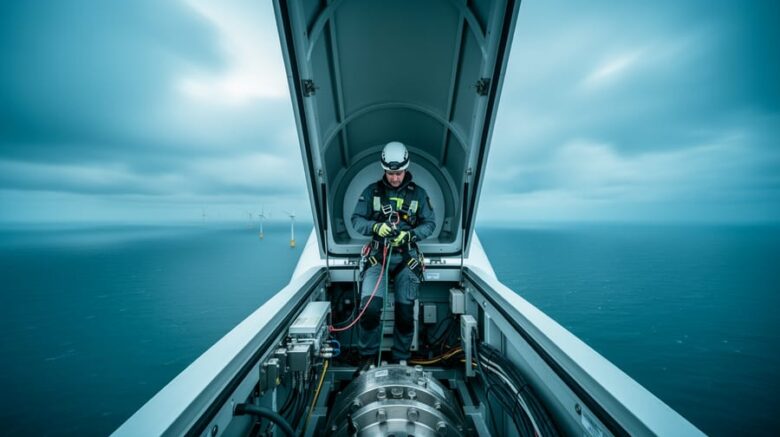
High above the ground, perched atop towers that can stretch over 300 feet into the sky, wind turbine technicians keep the renewable energy revolution spinning. These specialized professionals climb, troubleshoot, and repair the massive machines that convert wind into clean electricity, playing a hands-on role in reducing our dependence on fossil fuels.
The job combines elements of electrical work, mechanical repair, and high-altitude athletics. On any given day, a wind turbine technician might ascend a turbine tower to inspect gearboxes, replace worn components, or diagnose software issues affecting energy production. They work inside the nacelle, the car-sized housing at the top of the tower that contains the generator and other critical equipment, often in conditions that would challenge most workers: extreme temperatures, high winds, and heights that require both physical fitness and mental composure.
Wind energy has grown rapidly across the United States, with thousands of turbines now operating from Texas wind farms to offshore installations along the Atlantic coast. This expansion has created strong demand for skilled technicians. According to recent labor statistics, wind turbine technician positions rank among the fastest-growing jobs in America, with opportunities projected to increase substantially through 2034.
The career offers more than steady employment. It provides a chance to work outdoors, solve complex technical problems, and contribute directly to climate solutions. Whether you’re considering a career change or exploring renewable energy professions for the first time, understanding what these technicians actually do reveals both the challenges and rewards of maintaining our clean energy infrastructure.
What Is a Wind Turbine Technician?
A wind turbine technician, often called a wind tech, is a specialized tradesperson who installs, maintains, and repairs wind turbines that generate electricity from wind energy. These professionals are the hands-on experts who ensure that massive wind turbines, some standing over 300 feet tall with blades spanning the length of a football field, operate safely and efficiently to convert kinetic wind energy into clean electrical power.
Think of wind techs as the mechanics of the renewable energy world. While engineers design the turbines and energy companies plan wind farms, technicians are the ones climbing towers, troubleshooting problems at dizzying heights, and performing the physical work that keeps turbines spinning. They work on everything from the nacelle (the car-sized housing at the top of the tower that contains the generator and gearbox) to the rotor blades, hydraulic systems, and electrical components.
The role goes beyond basic maintenance. Wind turbine technicians are problem-solvers who must diagnose issues with complex mechanical, electrical, and computer systems, often while suspended hundreds of feet in the air. They conduct scheduled inspections, replace worn parts before failures occur, respond to breakdowns, and use sophisticated monitoring equipment to track turbine performance.
This profession matters because wind energy is one of the fastest-growing sources of electricity worldwide. Without qualified technicians to maintain the infrastructure, wind farms can’t deliver their promised clean energy. A single malfunctioning turbine might lose thousands of dollars in power generation per day, making the technician’s work directly impact both environmental goals and economic viability. As wind capacity expands across the globe, these professionals have become essential workers in the transition away from fossil fuels.
Core Responsibilities and Daily Tasks
Routine Maintenance and Inspections
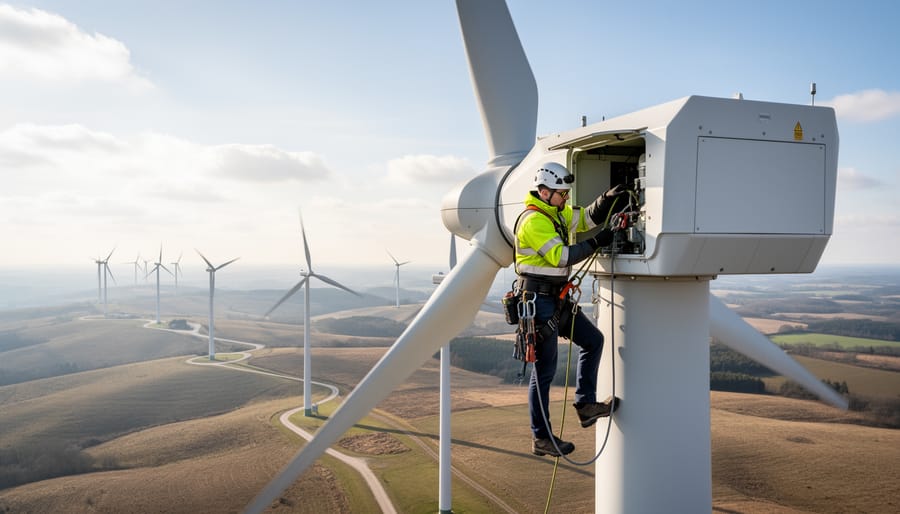
Wind turbine technicians typically follow strict maintenance schedules, climbing towers every few months to perform systematic checks that keep turbines generating power reliably. These preventive visits begin with visual inspections of major components, technicians inspect blades and gearboxes for cracks, erosion, or unusual wear patterns that could lead to failures if left unchecked.
Lubrication is a critical routine task. Gearboxes contain hundreds of moving parts that require precise amounts of grease and oil to prevent friction damage. Technicians drain old lubricants, replace filters, and apply fresh grease to bearings and other mechanical interfaces. They also tighten hundreds of bolts that can loosen from constant vibration, checking torque specifications on critical fasteners throughout the nacelle and tower.
Beyond the mechanical work, technicians monitor computerized performance data during each visit. They review sensor readings for temperature spikes, unusual vibrations, or power output drops that might signal developing problems. Software diagnostics help them spot issues before they cause breakdowns. They also inspect electrical connections, test safety systems like lightning protection and emergency brakes, and clean sensors that track wind speed and direction.
This scheduled maintenance isn’t glamorous, but it prevents the expensive failures and downtime that cost wind farm operators thousands of dollars per day in lost electricity generation.
Troubleshooting and Repairs
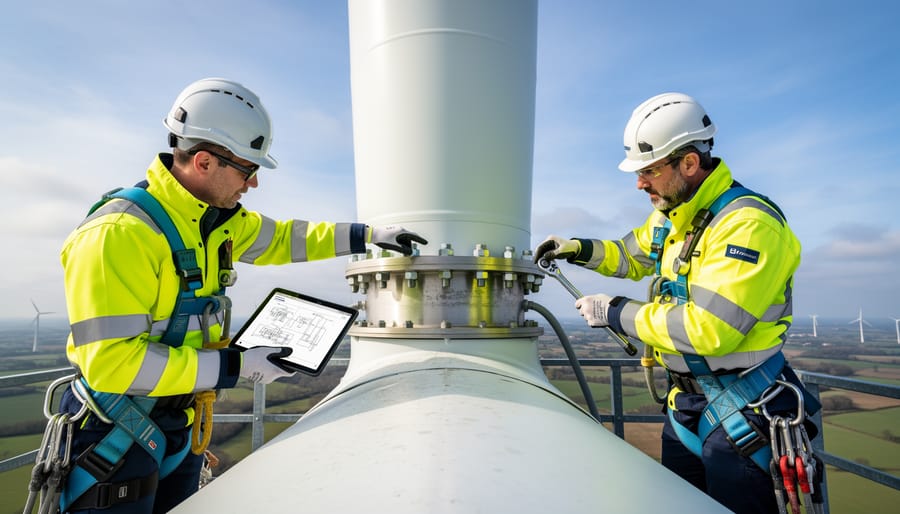
When turbines underperform or fail, technicians shift from routine checks to detective work. The diagnostic process starts with analyzing error codes from the turbine’s control system, reviewing performance data, and physically inspecting components to pinpoint the source of the problem. They must troubleshoot mechanical or electrical issues ranging from simple sensor malfunctions to complex generator failures.
Electrical repairs might involve replacing damaged cables, fixing circuit boards, or addressing connection issues in the nacelle’s intricate wiring systems. Hydraulic problems require diagnosing leaks, replacing worn seals, or repairing the pitch control system that adjusts blade angles. Mechanical failures can mean swapping out worn bearings, fixing gearbox issues, or replacing damaged brake components. Some repairs happen on-site with the technician’s portable tools and spare parts inventory, while major component failures require coordinating crane operations and working with specialized repair teams.
The challenge lies in working efficiently under pressure. A non-functioning turbine means lost energy production and revenue, so techs must diagnose accurately the first time and execute repairs safely despite time constraints, often while perched hundreds of feet in the air.
Working with Advanced Technology Systems
Modern wind turbines rely on sophisticated computer systems that would rival many industrial facilities, and technicians must be comfortable working with all of them. The primary interface is the SCADA (Supervisory Control and Data Acquisition) system, which monitors everything from blade pitch angles to generator temperatures in real-time. Techs analyze this data stream to spot performance issues before they become failures.
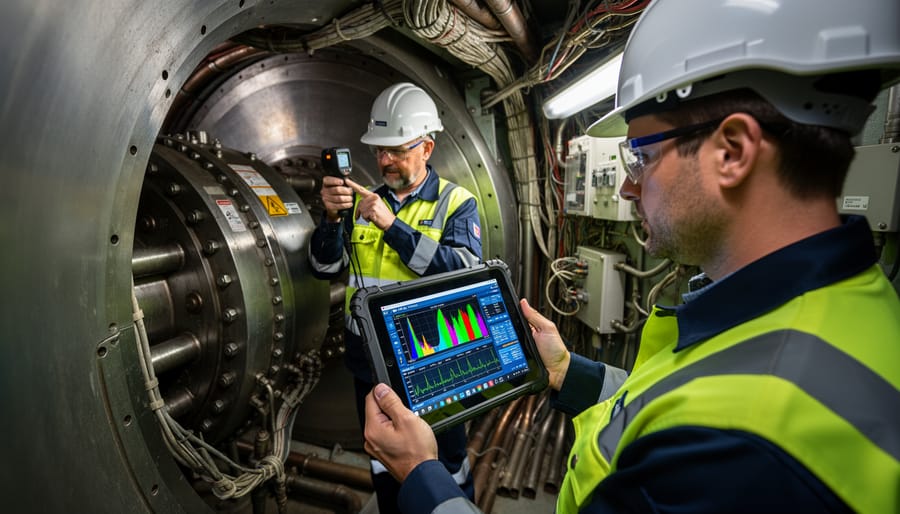
Beyond monitoring, technicians work hands-on with programmable logic controllers (PLCs) that govern turbine operations. They update software, adjust parameters for optimal performance in changing wind conditions, and troubleshoot communication issues between components. Many newer turbines include condition monitoring systems with vibration sensors and thermal cameras that detect bearing wear or electrical hot spots. Techs must interpret this sensor data and decide whether an alert signals a genuine problem or a false alarm.
The job also involves working with remote diagnostic tools, using tablets or laptops to run system tests while inside the nacelle. Some technicians even pilot drones equipped with infrared cameras to inspect blades for damage without climbing. This technology-heavy aspect of the work means continuous learning as turbine manufacturers upgrade systems and introduce new diagnostic capabilities.
The Technology Wind Turbine Techs Work With
Modern wind turbines are sophisticated machines packed with technology that requires hands-on expertise to maintain. Technicians need working knowledge of multiple interconnected systems, each serving a specific function in converting wind into usable electricity.
The turbine’s brain is its control system, which constantly monitors performance and adjusts operations. Technicians spend considerable time interacting with these computerized systems, reviewing data logs, diagnosing error codes, and fine-tuning parameters to optimize energy production. Understanding how these digital systems communicate with physical components is essential, as many repairs involve both software troubleshooting and hands-on mechanical work.
- SCADA Systems
- Supervisory Control and Data Acquisition systems allow remote monitoring and control of turbine operations, collecting performance data and sending alerts when issues arise. Technicians use SCADA to diagnose problems before climbing the tower and to verify repairs remotely.
- Pitch Control Systems
- These hydraulic or electric mechanisms adjust the angle of turbine blades to optimize power generation at different wind speeds and to stop the turbine safely when needed. Technicians regularly service pitch motors, actuators, and backup battery systems that keep this critical safety feature functional.
- Yaw Systems
- Motorized systems that rotate the entire nacelle to keep the turbine facing into the wind for maximum efficiency. Technicians maintain yaw motors, brake systems, and the large gear ring that enables this rotation.
- Generators
- Convert the mechanical rotation of the turbine into electrical power, typically producing between 1.5 and 15 megawatts depending on turbine size. Technicians inspect winding insulation, cooling systems, and electrical connections to prevent failures.
- Gearboxes
- Increase the slow rotation of the rotor to the high speeds needed for efficient power generation, though newer direct-drive turbines eliminate this component. When present, gearboxes require regular oil analysis and bearing inspections to prevent catastrophic failures.
Beyond these core systems, technicians work with hydraulic equipment that powers brakes and blade adjustment mechanisms. They maintain cooling systems that prevent generators and gearboxes from overheating during operation. Electrical expertise is critical for working with high-voltage systems, transformers, and the complex wiring that connects components.
Sensors throughout the turbine measure everything from wind speed and vibration to oil temperature and blade position. Technicians must interpret this sensor data, replace faulty units, and understand how sensor readings relate to overall turbine health. This diagnostic capability separates effective technicians from those who simply follow repair manuals.
The job also involves specialized tools and safety equipment. Torque wrenches calibrated for massive bolts, thermal imaging cameras to detect electrical hotspots, vibration analysis equipment, and climbing gear rated for industrial use are all part of a technician’s toolkit. Mastering these technologies takes time, but this variety is exactly what makes the work engaging for people who enjoy both digital troubleshooting and hands-on repair.
Skills and Training Required
Becoming a wind turbine technician requires a specific combination of technical education, hands-on training, and physical capabilities. In 2026, most employers require at least a technical certificate or associate degree from a community college or trade school. Programs in wind energy technology, industrial maintenance, or electrical systems typically take one to two years to complete and cover everything from electrical theory to hydraulic systems and mechanical components.
Many technicians also pursue specialized certifications that boost their employability. The Global Wind Organisation (GWO) offers standardized safety training that has become nearly mandatory in the industry, covering first aid, manual handling, fire awareness, and working at heights. Some positions additionally require OSHA certifications for confined space entry and fall protection. Employers increasingly value candidates who hold North American Board of Certified Energy Practitioners (NABCEP) credentials or manufacturer-specific certifications for particular turbine models.
The technical skill set is broad. You need solid electrical knowledge to troubleshoot circuits, read complex wiring diagrams, and work safely with high-voltage systems. Mechanical aptitude helps when diagnosing gearbox problems, replacing worn bearings, or adjusting blade pitch mechanisms. Today’s technicians must also be comfortable with computer systems and data analysis software, since modern turbines generate streams of performance data that technicians monitor and interpret. Troubleshooting skills matter as much as textbook knowledge, the ability to diagnose why a turbine suddenly stopped producing power often separates good technicians from great ones.
Physical requirements are significant and non-negotiable. Climbing 250 to 300 feet multiple times per day is standard, so comfort with heights is essential. The work demands strength for lifting heavy tools and components, often in awkward positions within tight nacelle spaces. You need excellent balance and coordination, plus the stamina to work long shifts in extreme temperatures, strong winds, and occasionally harsh weather conditions.
Many technicians start as apprentices or junior technicians, learning directly from experienced professionals on actual wind farms. This mentorship model allows newcomers to develop practical skills that classroom training cannot fully replicate. The career path rewards those who combine formal education with genuine mechanical curiosity and a willingness to work in challenging environments.
The Work Environment and Conditions
Working as a wind turbine technician means embracing one of the most physically challenging environments in the renewable energy sector. The job demands comfort with extreme heights, unpredictable weather, and significant physical exertion, often in remote locations far from urban centers.
Height is perhaps the most defining aspect of the work environment. Technicians routinely climb turbine towers ranging from 200 to 400 feet tall, ascending narrow internal ladders that can take 20 minutes or more to scale. Once at the top, they perform repairs and maintenance inside the cramped nacelle or even venture outside onto the blades themselves, secured by safety harnesses while wind whips around them. This isn’t occasional work at heights; it’s the core of the job, repeated multiple times throughout each shift.
Weather conditions rarely pause the work schedule. Technicians often work in rain, snow, extreme heat, and freezing temperatures because turbines operate in all conditions and require maintenance regardless of comfort. Wind speeds present particular challenges since technicians sometimes need to climb during breezy conditions, though strict safety protocols prohibit work when gusts exceed certain thresholds.
The position requires extensive travel, as wind farms are typically located in rural or offshore areas. Many technicians spend weekdays living near remote wind farms, returning home only on weekends. Some positions involve rotating schedules, with technicians working several consecutive weeks at distant sites before time off. This lifestyle suits those who enjoy variety and don’t mind temporary accommodations, but it can challenge work-life balance.
Physical demands extend beyond climbing. Technicians lift heavy equipment, maneuver in tight spaces, kneel or crouch for extended periods, and work with their arms overhead while troubleshooting electrical systems. The job requires genuine physical fitness and stamina, making it better suited for those who maintain active lifestyles and don’t mind getting their hands dirty in demanding conditions.
Career Outlook and Opportunities in 2026
The wind turbine technician field is experiencing remarkable growth in 2026, ranking among the fastest-growing occupations in North America. The U.S. Bureau of Labor Statistics projects 60% growth for this profession through 2032, driven by aggressive renewable energy targets and the retirement of aging coal plants. Wind farms across the Midwest, Great Plains, and offshore sites along both coasts are actively hiring to maintain existing turbines and staff new installations.
Salary expectations for wind turbine technicians have climbed steadily with demand. Entry-level technicians typically earn between $45,000 and $52,000 annually, while experienced professionals command $60,000 to $75,000. Lead technicians and those with specialized skills in offshore wind or advanced diagnostics can exceed $85,000. Many positions include benefits like travel allowances, company vehicles, and comprehensive health coverage.
The career ladder offers clear advancement paths. Technicians often move into senior roles after three to five years, taking responsibility for complex repairs and mentoring newer team members. From there, opportunities open in site supervision, regional maintenance management, or specialized positions in quality assurance and safety compliance. Some technicians transition into training roles at technical colleges or move to manufacturer representatives, leveraging their field experience.
Geographic mobility significantly impacts opportunity. Texas, Iowa, Oklahoma, and California lead in onshore installations, while New York, Massachusetts, and New Jersey are investing heavily in offshore wind projects. Technicians willing to relocate or travel for assignments find the most options and highest compensation. The offshore sector, though newer, offers premium pay due to additional technical complexity and harsher working conditions.
Real-World Impact: Why This Job Matters
When a wind turbine technician climbs a tower to repair a faulty generator or replace damaged blades, they’re doing far more than fixing equipment. Every turbine they keep running produces enough electricity to power hundreds of homes without burning fossil fuels. A single 2.5 MW turbine operating at optimal efficiency can generate roughly 6,000 MWh annually, displacing approximately 3,000 metric tons of carbon dioxide that would otherwise come from coal-fired power plants.
The math becomes striking when you consider that technicians often maintain entire wind farms with dozens or even hundreds of turbines. A technician who prevents just two days of downtime on a mid-sized turbine saves enough clean energy to power an average American home for nearly a year. Multiply that across their career, and one skilled technician’s work keeps millions of pounds of greenhouse gases out of the atmosphere.
Beyond the numbers, these professionals are solving real problems. When a component fails during peak wind season, every hour of downtime means nearby communities burn more natural gas or coal to meet electricity demand. Technicians who respond quickly and fix issues right the first time directly reduce reliance on fossil fuels.
They’re also building energy independence. Wind farms maintained by skilled technicians reduce how much oil and gas we import, keeping energy dollars in local economies while creating a cleaner grid for future generations. It’s hands-on climate action with measurable results.
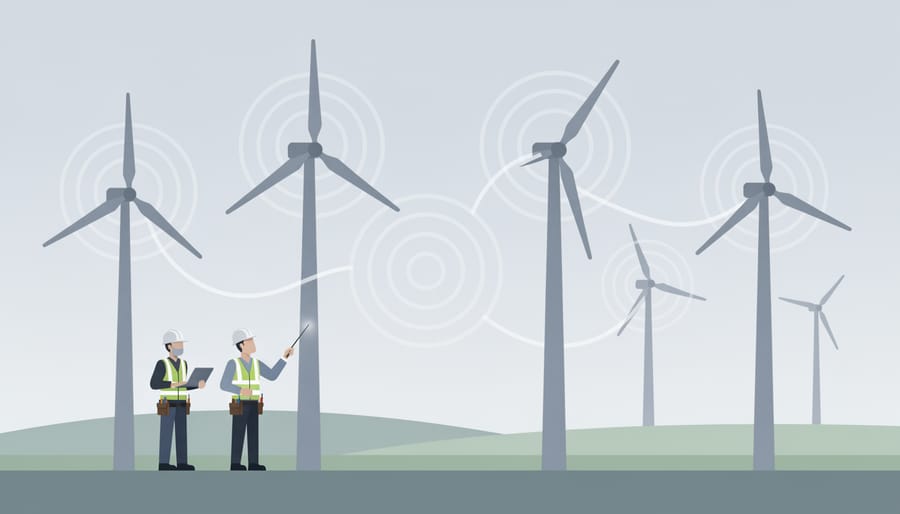
Wind turbine technicians are the unsung heroes keeping our clean energy revolution running. Every time you see those massive blades turning against the sky, there’s a team of skilled professionals who climbed hundreds of feet in the air, braved challenging weather, and applied their technical expertise to keep those systems operational. Without these dedicated workers, the wind turbines generating electricity for millions of homes would eventually grind to a halt.
This career combines technical challenge, physical adventure, and genuine environmental impact in ways few other jobs can match. For anyone excited about renewable energy but wanting something more hands-on than an office role, wind turbine technology offers real opportunity. The industry needs thousands of new technicians in the coming years as wind farms continue expanding across the country.
Ready to be part of the solution? Research training programs in your area, talk to wind farm operators about apprenticeships, or simply learn more about how wind energy works. If you’re not pursuing this career yourself, support wind power initiatives in your community. Every turbine spinning means cleaner air, reduced carbon emissions, and skilled workers building a sustainable future.