
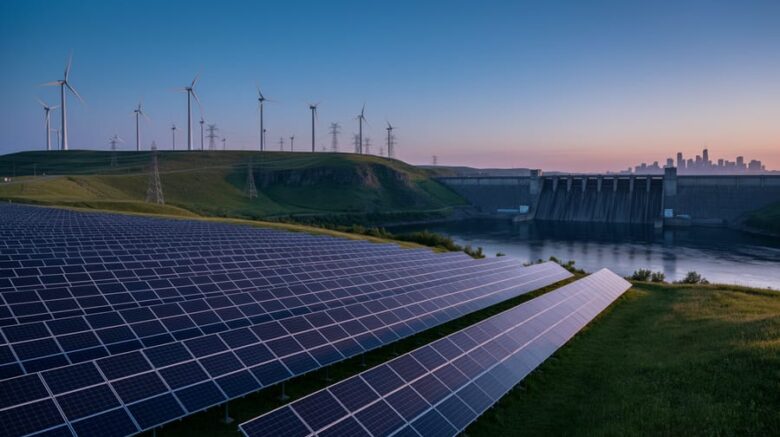
Canada’s 2050 Vision for renewable energy isn’t bad. It’s ambitious, challenging, and necessary if the country wants to meet its climate commitments and transition to a net-zero economy. The question itself reveals a common concern: can renewable energy really power an entire nation by mid-century, or is this roadmap too optimistic to be credible?
The Canadian Renewable Energy Association’s 2050 Vision outlines a pathway to transform Canada’s energy system from one dominated by fossil fuels to one powered almost entirely by wind, solar, hydro, and other renewable sources. This means generating enough clean electricity to meet growing demand, electrifying transportation and heating systems, and building the infrastructure to move power where it’s needed. For perspective, Canada currently gets about 68% of its electricity from renewable sources, primarily hydroelectric. Reaching 100% requires not just adding capacity but fundamentally rethinking how energy is produced, stored, and distributed across the second-largest country on Earth.
Critics point to real obstacles: the cost of building transmission lines across remote regions, the challenge of storing renewable energy for windless nights, and the political will required to sustain such a massive transformation over decades. Supporters counter that the technology exists, costs continue to drop, and the economic opportunity is enormous. The question isn’t whether the vision is bad. It’s whether Canadians will commit the resources and policy support needed to make it work. This article breaks down what the 2050 Vision actually proposes, examines the criticisms head-on, and explains what needs to happen between now and 2050 to turn this roadmap into reality.
What the CanREA 2050 Vision Means
CanREA’s 2050 Vision is Canada’s strategic roadmap for transforming the electricity sector into a fully renewable, net-zero emissions system by mid-century. The vision isn’t a government mandate, but rather a comprehensive plan developed by the Canadian Renewable Energy Association to guide industry, policymakers, and stakeholders toward a decarbonized power grid. It builds on existing federal commitments while laying out specific pathways to achieve carbon neutrality in electricity generation within roughly twenty-four years.
At its core, the vision centers on three interconnected principles: rapidly expanding renewable energy capacity, modernizing electricity infrastructure, and ensuring the transition benefits all Canadians. The target outcome is straightforward yet ambitious: replace fossil fuel generation with wind, solar, hydro, and other clean sources while maintaining reliable, affordable electricity across all provinces and territories. By 2050, Canada’s grid would produce virtually no greenhouse gas emissions while meeting growing demand from electrified transportation, buildings, and industry.
Understanding key concepts helps clarify what the vision actually entails:
- Net-zero electricity
- A power grid that produces no more carbon emissions than it removes from the atmosphere, achieved by eliminating fossil fuel generation and balancing any residual emissions with carbon capture or offsets.
- Renewable energy mix
- The combination of wind, solar, hydroelectric, geothermal, and biomass sources that together replace coal and natural gas plants, with each region leveraging its strongest renewable resources.
- Grid modernization
- Upgrading transmission lines, storage systems, and control technologies to handle variable renewable power and move electricity efficiently across provinces and territories.
- Just transition
- Policies and programs designed to support workers and communities currently dependent on fossil fuel jobs, ensuring economic opportunities in the new clean energy economy.
The word ‘vision’ itself is deliberate. It signals an aspirational but achievable target that requires coordinated action rather than a rigid, top-down directive. The CanREA framework acknowledges regional differences in resources, economic structures, and energy needs, allowing provinces flexibility in how they contribute to the national goal while maintaining the same end target.
How the 2050 Vision Works
Renewable Energy Expansion
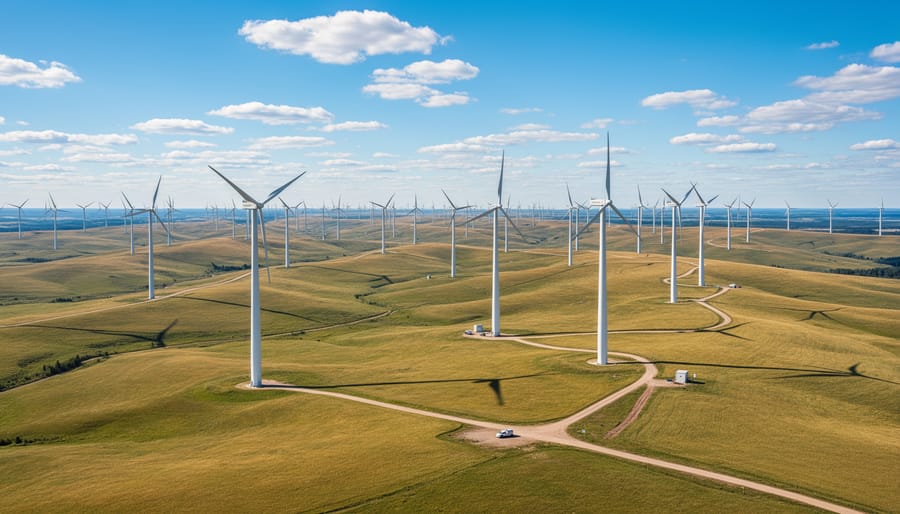
Canada’s path to net-zero electricity by 2050 requires massive capacity additions across all renewable sources. Wind power must grow from approximately 16 gigawatts in 2026 to an estimated 70-80 gigawatts by mid-century, with offshore wind development in Atlantic Canada and the Great Lakes representing a significant new frontier. Solar capacity needs to expand from around 5 gigawatts to at least 50 gigawatts, driven by utility-scale farms in the Prairies and distributed rooftop installations nationwide.
Hydroelectric power, already providing 60% of Canada’s electricity, will see selective expansion in British Columbia, Quebec, and Labrador, adding roughly 15-20 gigawatts while upgrading aging dams for greater efficiency. Geothermal remains the smallest contributor but could grow from negligible capacity to 5 gigawatts, particularly in Alberta and Saskatchewan where oil and gas expertise transfers well to heat extraction.
These targets aren’t arbitrary. Modeling by CanREA and government agencies accounts for increased electricity demand from vehicle electrification, building heating conversion, and industrial processes shifting away from fossil fuels. Meeting 2050 goals means doubling or tripling current renewable generation while maintaining grid reliability.
Grid Modernization and Storage
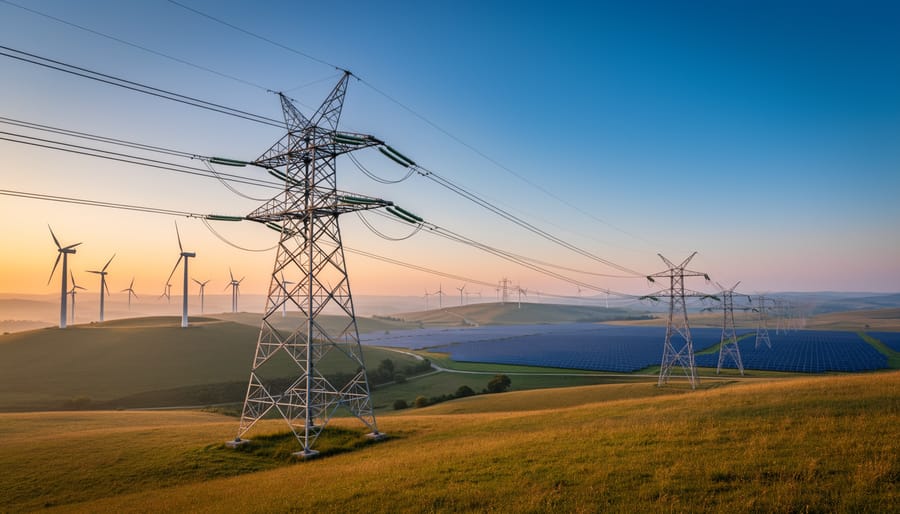
Canada’s electricity grid was built for centralized fossil fuel plants, not distributed renewable sources. Meeting the 2050 Vision requires substantial upgrades to transmission infrastructure, including high-voltage lines capable of moving electricity across provinces when wind blows stronger in Alberta or solar generates excess in Ontario.
Inter-provincial connections are critical because renewable generation varies by region and season. A modernized grid allows surplus clean power from one province to supply another during peak demand or low generation periods, reducing the need for backup fossil fuel plants.
Battery storage systems address renewables’ intermittency problem. Large-scale lithium-ion installations store excess solar and wind energy during production peaks, then discharge it when generation drops or demand spikes. Canada is investing in utility-scale battery projects and exploring emerging technologies like flow batteries and compressed air storage.
Smart grid technology optimizes this complex system, using real-time data to balance supply and demand, predict weather patterns affecting generation, and automatically reroute power. These digital controls make renewable energy reliable enough to replace baseload fossil fuel generation.
Policy and Market Mechanisms
The 2050 Vision relies on a coordinated policy framework to make renewable energy financially viable and accelerate private investment. Carbon pricing mechanisms put a cost on emissions, making wind and solar more competitive against fossil fuels. Federal and provincial renewable energy standards mandate minimum percentages of clean electricity in the grid, creating guaranteed demand for new projects.
Investment tax credits and production incentives reduce upfront costs for developers, while green bonds and public-private partnerships channel capital into transmission upgrades and storage infrastructure. Regulatory reforms streamline permitting processes that historically delayed projects by years. Power purchase agreements provide long-term revenue certainty, enabling developers to secure financing. These market signals and policy levers work together to shift billions in capital toward the renewable infrastructure Canada needs, transforming the 2050 targets from aspirational goals into bankable projects.
Components of Canada’s Renewable Energy Transition
Canada’s 2050 Vision doesn’t rely on a single technology. It requires a diverse mix of renewable energy sources working together to replace fossil fuels and meet growing electricity demand. Each technology plays a specific role, and understanding their current status helps clarify whether the vision’s scale is realistic or overreaching.
Wind energy forms the backbone of the expansion plan. Onshore wind farms already generate substantial power across the Prairies and Atlantic provinces, with roughly 14 gigawatts of capacity installed by 2026. The vision calls for tripling or quadrupling that figure, which means building turbines in previously untapped regions and repowering older sites with taller, more efficient models. Offshore wind remains in early stages in Canada, with pilot projects planned for the Atlantic coast and potential sites identified off British Columbia. If deployed at scale, offshore turbines could deliver consistent power in coastal areas where land constraints limit onshore development.
Solar photovoltaic installations have grown rapidly in Ontario, Alberta, and Quebec, both as utility-scale farms and distributed rooftop systems. Current capacity sits around 4 gigawatts, a fraction of what’s needed by 2050. The vision projects solar becoming a major contributor, especially in southern regions with strong sunlight. Unlike wind, solar pairs well with battery storage to address evening demand peaks.
The key technologies driving the transition include:
- Onshore wind, primary workhorse for bulk electricity generation in most provinces
- Offshore wind, high-capacity coastal generation with steady ocean breezes
- Solar photovoltaic, distributed and utility-scale installations for daytime power
- Run-of-river hydro, small-scale, low-impact hydroelectric without large reservoirs
- Pumped storage, moves water between reservoirs to store energy for peak demand
- Geothermal, taps underground heat for steady baseload power in suitable geology
- Green hydrogen, produces fuel from renewable electricity for industrial use and grid balancing
Hydroelectric power already supplies over half of Canada’s electricity, but most large dam sites are built. The vision focuses on run-of-river projects that divert a portion of streamflow without flooding valleys, and on pumped storage facilities that act like giant batteries by moving water uphill when excess wind or solar is available.
Geothermal remains the least developed technology nationally, with limited deployment outside experimental sites. Western provinces have geological potential, but drilling costs and resource uncertainty have slowed investment. Green hydrogen production, meanwhile, is gaining traction as a way to convert surplus renewable electricity into storable fuel for heavy industry and long-term energy reserves.
Real-World Applications and Progress to Date
Canada’s shift toward the CanREA 2050 Vision isn’t just a policy document, it’s driving tangible investments and construction across the country right now. As of 2026, multiple large-scale renewable projects demonstrate that the transition from ambition to reality is well underway.
Alberta leads in solar deployment, with over 4,000 MW of utility-scale solar capacity either operational or under construction. The Travers Solar Project near Lomond, Canada’s largest solar installation at 465 MW, came online in 2023 and continues to demonstrate how prairie provinces can leverage abundant sunshine. Meanwhile, Saskatchewan’s Blue Hill Wind Project added 175 turbines and 300 MW of capacity in 2024, creating hundreds of wind technician jobs in rural communities that previously relied on fossil fuel industries.
Eastern provinces are focusing on offshore wind potential. Nova Scotia’s Marine Renewable Energy Act has enabled planning for Atlantic Canada’s first commercial-scale offshore wind farms, with construction expected to begin by 2027. Quebec continues expanding its hydroelectric base while adding 3,500 MW of wind capacity through competitive procurement processes that have driven costs down 40% since 2020.
Grid modernization projects prove equally critical. The Alberta-Saskatchewan Interconnection, completed in 2024, allows renewable energy sharing between provinces and helps manage grid stability during extreme weather events. Ontario’s energy storage mandate requires 2,500 MW of battery capacity by 2028, with 800 MW already operational.
Environmental benefits are measurable. Provinces replacing coal generation with renewables report improved air quality metrics tracked through the Air Quality Health Index particularly in former coal-dependent regions. This shift becomes especially significant during summer heat events that previously triggered temperature warnings and strained electricity demand.
Investment figures tell the growth story. Canadian renewable energy attracted $12.4 billion in private capital in 2025 alone, according to industry data. Indigenous partnerships represent a key development model, with over 150 First Nations communities now holding ownership stakes in wind and solar projects, creating revenue streams while advancing reconciliation goals.
The pace suggests Canada can meet interim 2030 targets, though the final stretch to 2050 will require sustained political will and continued cost reductions in storage technology.
Common Concerns: Is the 2050 Vision Unrealistic?

The CanREA 2050 Vision faces skepticism on multiple fronts, with critics questioning whether the timeline is achievable and the costs manageable. The most common concern centers on economics: transitioning the entire electricity grid to renewables requires massive infrastructure investment, estimated in the hundreds of billions of dollars over the next two decades. Skeptics argue this spending could strain public budgets and drive up electricity rates for consumers, particularly in provinces still heavily reliant on coal and natural gas.
Job displacement worries are equally prominent. Canada’s fossil fuel sector employs thousands of workers, many in regions where energy extraction forms the economic backbone. Critics contend that shutting down coal plants and reducing natural gas generation threatens livelihoods without guaranteed replacement opportunities in renewable industries. While wind and solar projects do create jobs, they often require different skill sets and may not be located in the same communities facing layoffs.
Technical feasibility raises another red flag. Wind and solar generate power intermittently, dependent on weather conditions rather than constant availability. Opponents question whether battery storage technology and grid infrastructure can truly manage this variability at scale, especially during peak demand periods or extended low-wind, low-sun stretches. Some argue the 2050 timeline is either too ambitious given current technology, or paradoxically, too slow given climate urgency.
Is 2050 too late to address climate change?
The 2050 target aligns with international climate goals, though many scientists argue faster action is preferable. The vision represents a realistic timeline for complete grid transformation rather than a climate science deadline.
Can renewables really replace all fossil fuel power?
Multiple countries have already achieved high renewable penetration levels, demonstrating technical feasibility. Success depends on adequate storage, transmission infrastructure, and maintaining grid reliability during the transition.
What happens to workers in coal and natural gas?
The vision acknowledges transition support is essential, including retraining programs and economic development in affected regions. However, specific job transition plans remain under development in many provinces.
How much will the transition cost?
Estimates vary widely depending on technology costs and regional factors, but industry projections suggest significant upfront investment offset by long-term savings from fuel-free renewable generation and avoided climate damages.
Regional disparities compound these challenges. Provinces with different energy mixes face vastly different transition costs and timelines. Alberta and Saskatchewan, heavily coal-dependent, confront steeper hurdles than hydro-rich British Columbia or Manitoba. Critics point to this unevenness as evidence the vision lacks practical nuance for Canada’s diverse geography and political landscape.
Industry advocates counter these concerns by highlighting falling renewable costs, technological advances in storage, and successful transitions already underway in European countries. They argue that continued fossil fuel dependence carries its own economic and health costs, and that early investment positions Canada competitively in the growing clean energy economy.
So, is the CanREA 2050 Vision bad? The short answer: no. The vision is undeniably ambitious, pushing Canada to overhaul its electricity system within three decades. But ambitious doesn’t mean unrealistic or harmful. The transition to net-zero electricity by 2050 is both necessary to address climate change and achievable with sustained commitment from governments, industry, and citizens.
The challenges are real. Costs will be substantial, fossil fuel workers will need retraining support, and grid upgrades won’t happen overnight. Yet these obstacles aren’t reasons to abandon the vision, they’re problems requiring smart solutions. Countries worldwide are proving that renewable energy transitions work when backed by proper planning and investment.
What makes the difference between ambition and achievement? Public support. When Canadians understand the benefits of clean energy, advocate for strong climate policies, and participate in the transition, progress accelerates. Governments respond to constituent priorities, and businesses invest where they see demand.
You can contribute right now. Explore renewable energy options for your home or business, even if that means starting with energy efficiency upgrades. Contact your local representatives to express support for clean energy infrastructure and worker transition programs. Join community conservation initiatives or educational programs that spread awareness about sustainable practices.
The 2050 Vision isn’t just an industry roadmap, it’s a collective commitment to a cleaner, healthier future. Your participation matters.