

Hamilton’s air quality currently sits at a Low Risk level, with an Air Quality Health Index (AQHI) of 3 as of Sunday evening, July 26, 2026. This means outdoor activities are safe for nearly everyone, including sensitive groups. The forecast shows a slight uptick to Moderate Risk (AQHI 4) expected Monday, but conditions remain manageable for most residents planning their week ahead.
This snapshot comes less than two weeks after Hamilton experienced a significant air quality event. On July 15, 2026, the city issued an Orange Air Quality Warning when the AQHI was forecast to spike above 10 in the early evening, a level that triggers Environment and Climate Change Canada’s formal warning protocol. These fluctuations show why checking real-time air quality data matters for your health decisions.
Understanding what these numbers mean for your daily routine is straightforward. An AQHI of 3 signals ideal conditions for outdoor exercise, children’s playtime, and commuting by bike. Even at-risk populations with respiratory conditions can typically enjoy their usual activities without concern. When levels climb to 4 or higher, sensitive individuals may need to adjust their plans, but the general population can still go about their day normally.
You can take an active role in monitoring and improving Hamilton’s air quality by checking official AQHI forecasts before planning outdoor activities and reducing vehicle idling in your neighborhood.
Understanding Hamilton’s Air Quality Health Index (AQHI)
The Air Quality Health Index (AQHI) is Canada’s national tool for communicating outdoor air pollution levels and their health effects. Unlike older systems that measure individual pollutants, the AQHI considers the combined health impacts of three common air pollutants: ground-level ozone, nitrogen dioxide, and fine particulate matter (PM2.5). This approach gives you a more accurate picture of the real health risks when you step outside.
Environment and Climate Change Canada developed this index based on research showing that air pollution affects your cardiovascular and respiratory systems. The scale runs from 1 to 10+, with each number corresponding to a health risk category. At Low Risk (1-3), everyone can enjoy outdoor activities without concerns. Moderate Risk (4-6) means at-risk individuals should watch for symptoms but can still participate in usual activities. High Risk (7-10) calls for reducing or rescheduling strenuous outdoor activities if you’re sensitive to air pollution. Very High Risk (10+) requires serious precautions, especially for vulnerable groups.
| AQHI Level | Health Risk | At-Risk Populations | General Population |
|---|---|---|---|
| 1-3 | Low | Enjoy usual outdoor activities | Ideal conditions for outdoor activities |
| 4-6 | Moderate | Consider reducing intense outdoor activities if symptoms occur | No need to modify outdoor activities |
| 7-10 | High | Reduce or reschedule strenuous activities outdoors | Consider reducing intense outdoor activities if symptoms occur |
| 10+ | Very High | Avoid strenuous activities outdoors | Reduce or reschedule strenuous activities outdoors |
The AQHI updates hourly at monitoring stations across Hamilton, giving you current readings and three-day forecasts. Understanding the relationship between AQHI and wind patterns helps explain why readings can shift quickly, since wind direction and speed directly influence whether pollutants disperse or concentrate over the city. This real-time system lets you make informed decisions about when to go for a run, take kids to the park, or plan outdoor work.
Current Air Quality Readings for Hamilton (July 2026)
As of 7:00 PM EDT on Sunday, July 26, 2026, Hamilton’s Air Quality Health Index stands at 3, which falls into the Low Risk category. This reading applies to the broader Hamilton area and reflects generally favorable air quality conditions across the city. The downtown core shows a similar picture, with Hamilton Downtown recording an AQHI of 3 (Low Risk) as of 8:00 PM EDT the same evening.
Looking ahead to the coming days, the forecast indicates a slight uptick in air quality levels. Sunday night expects an AQHI maximum of 4, moving into Moderate Risk territory. This Moderate Risk level of 4 continues through Monday and Monday night before easing back to 3 (Low Risk) by Tuesday. Hamilton Downtown follows a comparable pattern, with forecast maximums of 4 (Moderate Risk) for Sunday, Sunday night, and Monday.
These readings represent measured data points rather than trends. An AQHI of 3 means current conditions support outdoor activities for all residents, while the forecasted rise to 4 suggests only minimal adjustments for those in at-risk groups. The difference between a 3 and a 4 is small in practical terms for most people, though sensitive individuals may want to monitor how they feel during prolonged outdoor exertion.
The consistency between Hamilton and Hamilton Downtown readings indicates relatively uniform air quality across the city’s monitoring stations. Both locations show the air quality remaining well below levels that would trigger health advisories or warnings. For context, these current and forecasted readings are substantially lower than the 10+ AQHI that prompted the Orange Air Quality Warning issued on July 15, 2026, demonstrating how variable Hamilton’s air quality can be from week to week.
What the Current Low to Moderate Risk Levels Mean for You
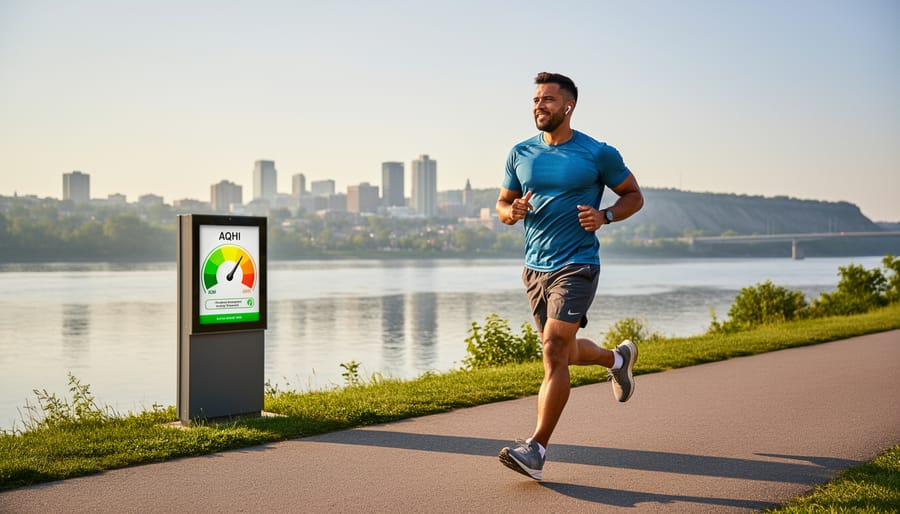
At a Low Risk level (AQHI 3), Hamilton’s air quality poses no significant health concerns for the general population. You can exercise outdoors, plan activities with children, and go about your daily routines without adjusting for air quality. This is the ideal condition for outdoor events, sports, and extended time outside.
For those in at-risk groups, including people with asthma, COPD, heart disease, young children, and older adults, Low Risk readings mean you can proceed with your usual outdoor activities. You don’t need to modify your exercise routine or limit time outside. At Moderate Risk (AQHI 4), which is forecast for the next couple of days, at-risk individuals should still enjoy their normal outdoor activities but may want to pay attention to how they feel. If you notice any breathing discomfort or unusual fatigue, consider taking a break or reducing the intensity of strenuous activity.
The difference between Low and Moderate Risk is subtle for most people. At Moderate Risk, the general population still has excellent conditions for outdoor activities. At-risk groups typically won’t experience symptoms at this level, though some highly sensitive individuals might notice slight effects during prolonged, vigorous exercise. The key is to listen to your body and adjust accordingly, rather than avoiding outdoor activities altogether.
These favorable conditions stand in sharp contrast to the Very High Risk warning issued on July 15, when outdoor activity required significant precautions. Current levels represent Hamilton air quality at its most accommodating for residents.
Recent Orange Air Quality Warning: What Happened on July 15
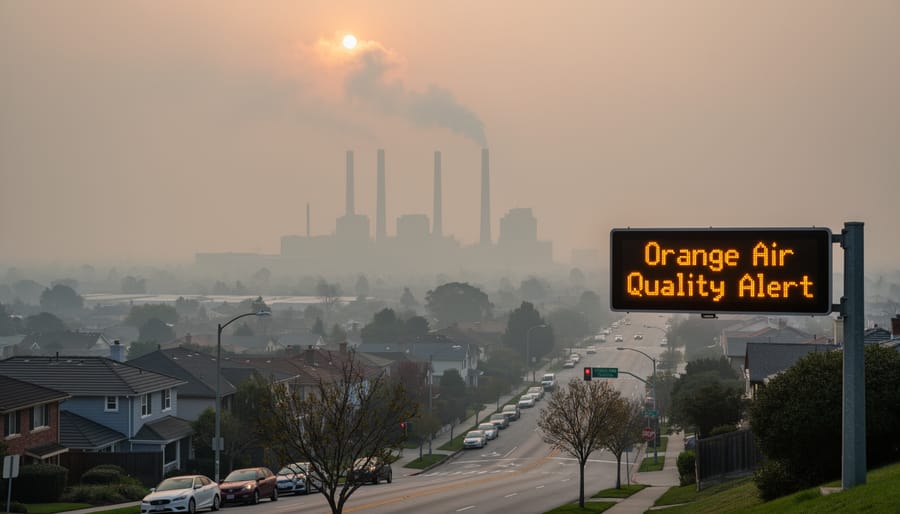
On July 15, 2026, Hamilton residents received an Orange Air Quality Warning from the City of Hamilton, signaling a significant deterioration in local air quality. The AQHI was forecast to reach 10+ (Very High Risk) during the early evening hours that Wednesday, triggering the official alert from Environment and Climate Change Canada.
When the AQHI climbs to 10 or higher, Environment and Climate Change Canada automatically issues an Orange Air Quality Warning that remains active until conditions improve and the agency cancels it. This threshold represents very high health risk for the entire population, not just vulnerable groups. At 10+ levels, even healthy adults experience reduced exercise tolerance and may develop breathing discomfort during outdoor activities. For at-risk populations including children, seniors, and those with respiratory or heart conditions, these readings signal potentially serious health impacts requiring immediate precautions.
The July 15 warning demonstrates how rapidly Hamilton’s air quality can shift from acceptable to hazardous. While current readings as of July 26 show Low to Moderate Risk levels (AQHI 3-4), the situation just eleven days earlier required public health intervention. Similar to what happens with wildfire smoke example events in other Canadian cities, Hamilton’s air quality can deteriorate within hours due to multiple factors including industrial emissions, vehicle traffic patterns, weather inversions that trap pollutants near ground level, and external pollution sources.
These sudden changes underscore why Hamilton residents should monitor real-time AQHI readings rather than relying on yesterday’s conditions. Environment and Climate Change Canada updates forecasts regularly, and signing up for alert notifications ensures you receive warnings before air quality reaches dangerous levels. The gap between July 15’s Very High Risk warning and today’s Low Risk reading shows both the volatility of local air quality and the importance of staying informed about current conditions.
How Wind and Weather Influence Hamilton’s Air Quality
Wind patterns and atmospheric conditions shape Hamilton’s air quality from hour to hour. When brisk winds sweep across Lake Ontario, they can disperse pollutants that accumulate over the city, lowering concentrations of ground-level ozone and particulate matter. Stagnant conditions do the opposite: light winds and stable air masses trap emissions close to the surface, allowing pollution to build throughout the day.
Hamilton’s location between Lake Ontario and the Niagara Escarpment creates unique meteorological influences. The lake moderates temperatures and generates local wind patterns that shift with the seasons. Westerly and southwesterly winds can carry industrial emissions from areas upwind, while northerly breezes tend to bring cleaner air from less developed regions. Temperature inversions, common during calm winter nights and summer mornings, act like a lid over the city, preventing vertical mixing and concentrating pollutants at ground level.
Industrial areas concentrated along the harbor and Burlington Street corridor contribute significant emissions during production cycles. When combined with traffic exhaust during rush hours and unfavorable wind conditions, these sources can temporarily elevate AQHI readings, as happened on July 15 when Hamilton reached a forecast of 10+ (Very High Risk). The rapid improvement from Very High Risk levels back to Low or Moderate Risk within days demonstrates how quickly changing winds and weather systems can flush out accumulated pollution.
Humidity and sunlight also drive chemical reactions that form secondary pollutants. Hot, sunny days with minimal breeze create ideal conditions for ground-level ozone formation, while cooler, cloudy periods with active weather systems typically bring fresher air. Understanding these weather effects on air quality helps explain why checking real-time AQHI readings matters more than relying on seasonal averages or yesterday’s forecast.
Who Should Pay Extra Attention to Air Quality Alerts
Air quality alerts exist because not everyone faces the same health risks from pollution. While most people can tolerate moderate air quality levels without issue, certain groups need to monitor the AQHI more closely and adjust their activities accordingly.
At-risk populations include:
- Children and infants, whose lungs are still developing and who breathe faster than adults
- Adults over 65, whose respiratory and cardiovascular systems may be more vulnerable
- People with asthma, COPD, or other chronic respiratory conditions
- Individuals with heart disease or cardiovascular problems
- Pregnant women, as air pollution can affect both mother and developing baby
- People who work outdoors for extended periods
- Athletes and those who exercise vigorously outside
These groups should pay attention to air quality forecasts before planning outdoor activities. When the AQHI reaches 7 or higher, at-risk individuals may experience symptoms like coughing, chest tightness, or shortness of breath during physical exertion. The July 15, 2026 Orange Air Quality Warning, when Hamilton’s AQHI was expected to reach 10+, represented conditions where at-risk groups should have reduced or rescheduled strenuous outdoor activities.
Children deserve special mention because they spend more time outside, are more active, and breathe more air per pound of body weight than adults. Parents and caregivers should watch for signs of respiratory distress during high pollution days, even if kids seem eager to play outside. Similarly, outdoor workers and serious athletes may need to modify their routines when air quality deteriorates, shifting intense workouts indoors or to early morning hours when pollution levels tend to be lower.
Where to Check Hamilton’s Air Quality in Real-Time
The most reliable source for Hamilton’s air quality information is Environment and Climate Change Canada’s official AQHI website. Visit their portal and select Hamilton or Hamilton Downtown from the location menu to see current readings updated hourly, plus three-day forecasts showing predicted maximum AQHI values. The site also provides health messages tailored to current conditions for both at-risk populations and the general public.
For mobile access, download the WeatherCAN app from Environment and Climate Change Canada. The free app lets you check AQHI readings alongside weather forecasts and can send push notifications when air quality changes significantly in your saved locations.
To receive alerts directly, sign up for Environment and Climate Change Canada’s email notification service. You’ll get messages when Orange Air Quality Warnings are issued for Hamilton, typically when AQHI is forecast to reach 10+. The City of Hamilton also posts air quality warnings on their website and social media channels when conditions warrant public notification.
Many weather apps now include air quality data, but verify they’re pulling from official Canadian sources rather than U.S.-based AQI systems, which use a different scale and measurement approach. Stick with government sources for the most accurate, locally-calculated AQHI readings specific to Hamilton’s monitoring stations.
Check readings in the morning before planning outdoor activities, and refresh during the day if you’re in an at-risk group. Air quality can shift within hours based on weather patterns, industrial activity, and traffic volumes.
Simple Actions That Help Improve Local Air Quality
While checking today’s air quality readings matters, the actions you take as a Hamilton resident directly influence the air we all breathe tomorrow. Individual choices add up across thousands of households, creating measurable change in local pollution levels.
Choose Walking, Cycling, or Transit When Possible
Vehicles contribute significantly to ground-level ozone and particulate matter. Swapping even two car trips per week for cycling or walking reduces emissions while improving your health. Hamilton’s growing network of bike lanes and trails makes active transportation increasingly practical. For longer distances, using HSR transit means one bus replaces dozens of individual vehicles during rush hour.
Stop Idling Your Engine
Turning off your engine when parked or waiting saves fuel and cuts pollution. Idling for more than 10 seconds wastes more fuel than restarting your engine. City bylaws already restrict idling near schools, but applying this practice everywhere, at drive-throughs, parking lots, and pickup zones, creates cleaner air in your immediate neighbourhood.
Reduce Home Energy Consumption
Most electricity in Ontario still comes from sources that produce emissions. Lower your thermostat by two degrees in winter, use LED bulbs, run full dishwasher and laundry loads, and unplug devices you’re not using. These steps cut both your utility bills and the fossil fuel demand driving regional air pollution.
Support Renewable Energy Solutions
Choosing clean energy benefits everyone who breathes Hamilton’s air. If you own property, investigate solar panel installations or green energy programs through your utility provider. Advocating for municipal renewable energy projects and supporting local conservation initiatives creates long-term improvements that daily AQHI monitoring alone cannot achieve.

Hamilton’s air quality sits in the Low to Moderate Risk range right now, with current readings showing an AQHI of 3 and forecasts reaching 4 over the next couple of days. These levels mean most residents can go about their outdoor activities without concern, though at-risk populations should stay aware of the forecasts.
The Orange Air Quality Warning issued on July 15, when the AQHI was expected to hit 10+, shows how quickly conditions can shift. That’s why checking real-time updates matters, especially if you have respiratory conditions, heart disease, or spend significant time outdoors. Environment and Climate Change Canada and the City of Hamilton provide current readings and alerts that help you plan your day with confidence.
Beyond monitoring the index, you can help keep Hamilton’s air cleaner long-term. Choose active transportation when possible, reduce vehicle idling, conserve energy at home, and support renewable energy initiatives in your community. Small actions add up across thousands of households, creating the kind of sustained improvement that protects everyone’s health. Check today’s air quality, then consider what role you’ll play in making tomorrow’s readings even better.