

Air quality in Barrie refers to the measure of pollution levels in the city’s atmosphere, tracked through the Air Quality Health Index (AQHI), which currently sits at 1 (low risk) for the region. This numerical scale, ranging from 1 to 10+, combines measurements of three dominant pollutants: fine particulate matter (PM2.5), ground-level ozone, and nitrogen dioxide, all of which affect how safely you can breathe outdoors today.
For residents checking conditions before a morning run or parents planning playground time, understanding Barrie’s air quality means grasping something unique about this Georgian Bay city: its location makes it a crossroads for wind-driven pollution. Wind patterns don’t just clear the air here. They carry pollutants across long distances, sometimes bringing industrial emissions from the Greater Toronto Area northward or sweeping cleaner air down from cottage country, depending on the day’s weather systems.
This article explains how the AQHI system works, what each risk category means for your daily activities, and why wind transport plays an outsized role in determining what you’re breathing. Environment and Climate Change Canada generates forecast maps twice daily, giving you a planning advantage if you know how to read them. Whether you’re managing a respiratory condition, coaching youth sports, or simply curious about the connection between renewable energy and cleaner air, you’ll find practical guidance for using real-time data to protect your health and make informed choices about outdoor time.
What Air Quality Means for Barrie Residents

Air quality describes the condition of the air around us, specifically measuring the concentration of pollutants that can affect human health. For Barrie residents, it answers a practical question: is today’s air clean enough to take the kids to the park, go for a run along the waterfront, or keep the windows open?
In Canada, air quality is communicated through the Air Quality Health Index, a standardized system that tracks three dominant pollutants and translates their combined impact into a simple numerical scale. Environment and Climate Change Canada generates forecast maps twice daily, giving Barrie residents advance notice of changing conditions.
- Air Quality Health Index (AQHI)
- A numbered scale from 1 to 10+ that tells you how clean or polluted the air is and what health risks it may pose. The higher the number, the greater the health risk from breathing outdoor air.
- Fine Particulate Matter (PM2.5)
- Microscopic particles smaller than 2.5 micrometers that can penetrate deep into lungs and enter the bloodstream. These particles come from vehicle exhaust, industrial emissions, and smoke.
- Ground Level Ozone (O3)
- A lung irritant formed when pollutants from vehicles and industry react with sunlight, particularly common on hot summer days. Unlike the protective ozone layer high in the atmosphere, ground level ozone harms respiratory health.
- Nitrogen Dioxide (NO2)
- A reddish-brown gas produced primarily by vehicle engines and power plants that irritates airways and can worsen asthma. It serves as a marker for the broader mix of traffic-related pollutants.
The system uses four risk categories: low risk (1-3), moderate risk (4-6), high risk (7-10), and very high risk (above 10). Barrie currently sits at a reading of 1, classified as low risk, meaning most residents can pursue normal outdoor activities without concern. This matters most for vulnerable populations including young children, older adults, and anyone with heart or lung conditions, who feel the effects of poor air quality first and most severely.
How the Air Quality Health Index Works
The Three Pollutants That Matter Most
Canada’s AQHI uses three pollutants because they consistently pose the greatest risk to human health and come from the most common sources affecting communities like Barrie.
Fine particulate matter (PM2.5) consists of microscopic particles smaller than 2.5 micrometers, about thirty times finer than a human hair. These particles come from vehicle exhaust, industrial emissions, wood burning, and wildfire smoke. Their tiny size allows them to bypass your body’s natural filters and penetrate deep into your lungs and bloodstream, triggering asthma attacks, aggravating heart conditions, and increasing respiratory infections. Long-term exposure raises the risk of chronic lung disease and cardiovascular problems.
Ground level ozone (O3) forms when sunlight triggers chemical reactions between nitrogen oxides and volatile organic compounds from vehicles, power plants, and industrial facilities. Unlike the protective ozone layer high in the atmosphere, ground-level ozone at breathing height irritates airways, reduces lung function, and worsens conditions like asthma and bronchitis. Barrie sees higher ozone levels during hot, sunny summer days when these chemical reactions intensify.
Nitrogen dioxide (NO2) comes primarily from burning fossil fuels in vehicles, power generation, and heating systems. This reddish-brown gas inflames the lining of your airways, makes you more susceptible to respiratory infections, and can trigger asthma symptoms even at moderate concentrations. Children and people with existing lung conditions face the greatest risk.
These three pollutants drive the AQHI and wind transport patterns that determine Barrie’s daily air quality readings, making them essential indicators for protecting public health.
Understanding AQHI Risk Categories
The AQHI divides air quality conditions into four AQHI risk categories and ranges that guide your decisions about outdoor activities. These categories translate complex pollution measurements into practical health guidance.
Low risk (1-3) means ideal conditions for everyone. You can exercise outdoors, plan sporting events, and spend extended time outside without concern. Barrie currently sits at AQHI 1, reflecting clean air conditions that pose minimal health impact even for sensitive individuals.
Moderate risk (4-6) signals a shift for vulnerable groups. Children with asthma, elderly residents, and those with heart or lung conditions should consider reducing intense outdoor exertion during peak pollution hours. The general population can maintain normal activities without worry.
High risk (7-10) requires broader caution. Everyone should reduce prolonged or strenuous outdoor activity. Vulnerable groups face increased symptoms, breathing difficulty, chest tightness, coughing, and may need to reschedule outdoor plans or move activities indoors.
Very high risk (above 10) represents the most severe conditions. All residents should avoid or significantly reduce outdoor physical activity. Vulnerable populations should stay indoors with windows closed. These events are rare in Barrie but can occur during wildfire smoke episodes or severe smog conditions when wind carries pollution from distant sources directly into the region.
How Wind Patterns Drive Air Quality Issues in Barrie
Barrie sits roughly 90 kilometers north of Toronto, positioned in a geographic sweet spot where winds can work either as a shield or a delivery system for airborne pollutants. The city’s location on the western shore of Lake Simcoe means its air quality is shaped less by what happens locally and more by what arrives on the wind from distant sources.
When wind carries pollution long distances Barrie often finds itself downwind of the Greater Toronto Area, one of Canada’s largest concentrations of vehicles, industry, and urban emissions. On days when southwesterly winds dominate, a common pattern during summer, nitrogen dioxide from traffic and ground-level ozone from photochemical reactions can travel north along the Highway 400 corridor and settle over Barrie, even when local emissions remain minimal.
Several key factors determine whether wind improves or degrades Barrie’s air quality on any given day:
- Prevailing wind direction, southwesterly winds bring urban pollution, while northerly winds pull in cleaner air from forested regions
- Distance from major emission sources, Toronto’s industrial zones, Vaughan’s distribution centers, and highway traffic all contribute pollutants that drift northward
- Seasonal weather patterns, summer stagnation allows pollutants to build up, while winter inversions trap emissions near the surface
- Local topography, the Niagara Escarpment and surrounding lakes can channel or disrupt air flow, concentrating pollutants in unexpected pockets
Wildfire smoke presents another wind-driven threat. During summer months, massive plumes from fires in Quebec or western provinces can travel hundreds of kilometers, driven by high-altitude winds that push fine particulate matter across provincial boundaries. These events can spike Barrie’s PM2.5 levels dramatically within hours, transforming a low-risk day into a high-risk warning despite zero change in local conditions. Understanding these transport mechanisms explains why checking the AQHI forecast matters more than looking out the window, clear skies don’t always mean clean air.
Types of Air Quality Events Barrie Experiences
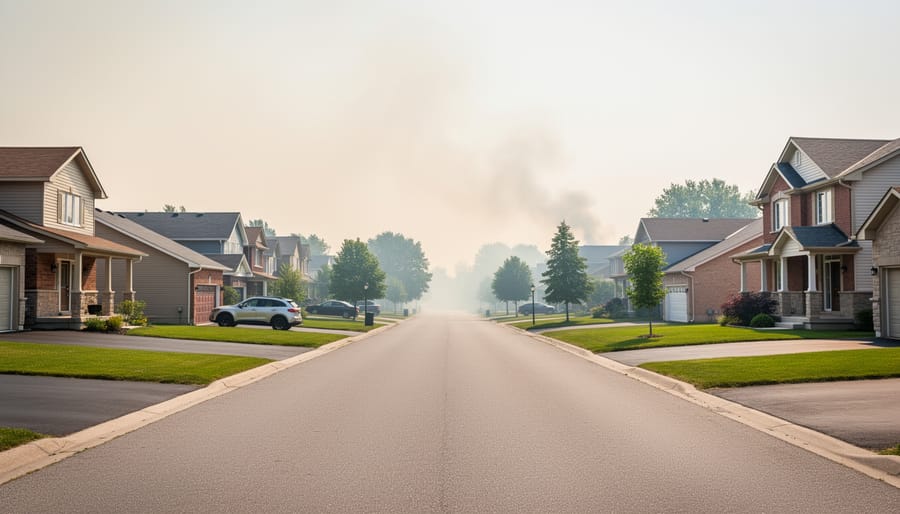
Barrie residents encounter four distinct air quality scenarios throughout the year, each shaped by specific weather patterns and pollution sources.
Seasonal smog events typically occur during hot, sunny summer days when ground level ozone forms from chemical reactions between nitrogen oxides and volatile organic compounds. Stagnant air masses and light winds trap these pollutants locally, allowing concentrations to build. Southwest winds can also carry urban pollution from the Greater Toronto Area northward toward Barrie, compounding local formation.
Wildfire smoke transport has become increasingly common during spring and summer months. Prevailing westerly and northwesterly winds can carry fine particulate matter from forest fires hundreds or even thousands of kilometers away, turning skies hazy and pushing AQHI readings into moderate or high risk categories even when local sources are minimal. The wildfire smoke impact depends entirely on wind direction and atmospheric mixing conditions.
Winter inversion events develop when cold air becomes trapped beneath warmer air layers, preventing normal dispersion of emissions from vehicles and heating systems. These calm, cold periods with minimal wind allow nitrogen dioxide and particulate matter to accumulate near ground level, particularly during morning and evening rush hours.
Localized pollution episodes result from specific emission sources combined with unfavorable wind conditions. Light winds or calm air can concentrate traffic emissions along major corridors, while rapid wind shifts may temporarily direct industrial emissions toward residential areas before dispersing.
How Barrie Residents Can Use Air Quality Information
Environment and Climate Change Canada updates air quality forecast maps twice daily, making it easy to check current and predicted conditions before you head outside. Visit or download the WeatherCAN app to view the AQHI forecast for Barrie. Both platforms show today’s reading and a 24-hour outlook, helping you plan activities around air quality fluctuations.
When the AQHI reaches 4-6 (moderate risk), consider shortening intense outdoor exercise sessions or moving them earlier in the day when ozone levels are typically lower. If you have asthma or heart disease, watch for breathing difficulty and keep prescribed medications accessible. At 7-10 (high risk), vulnerable groups, including children, seniors, and anyone with respiratory conditions, should reduce prolonged outdoor exertion. Shift strenuous activities indoors or reschedule them for days with better air quality.
Parents can check the forecast before school sports or playground time. If the AQHI is elevated, outdoor recess might be better replaced with indoor activities for children with asthma. Elderly residents should avoid yard work or brisk walks during moderate-to-high risk periods.
You can also reduce pollution on poor air quality days. Postpone mowing the lawn, which stirs up particles and emits engine exhaust. Combine car trips or walk for short errands to cut nitrogen dioxide emissions. Avoid idling your vehicle, especially near schools or parks where children gather.
Staying informed takes minutes but protects your health and helps reduce the pollutants that worsen air quality for everyone in Barrie.
The Connection Between Air Quality and Renewable Energy
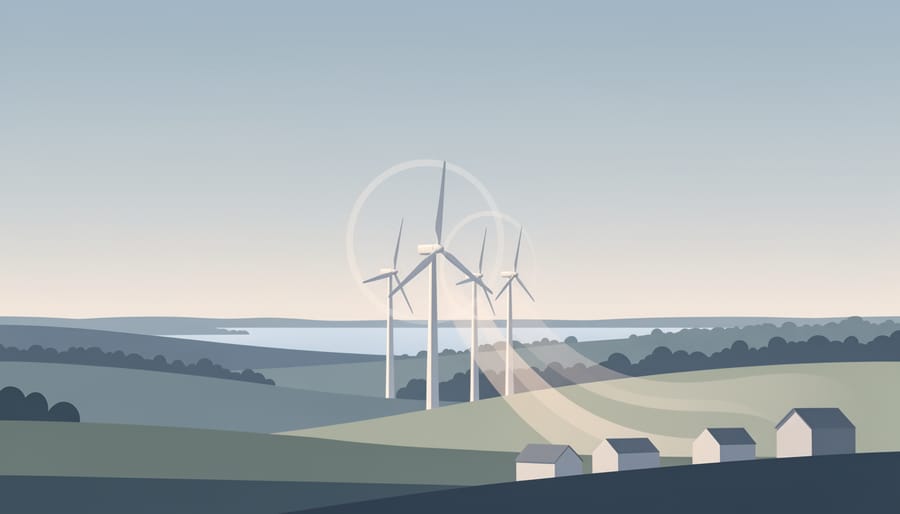
The electricity powering your home directly affects the air you breathe. When power plants burn coal or natural gas to generate electricity, they release the same pollutants tracked by the AQHI, nitrogen dioxide from combustion processes and particulate matter from incomplete burning. Wind turbines and solar panels produce zero emissions during operation, eliminating these pollutants at the source.
Ontario has made significant progress in this transition. The province phased out coal-fired power generation in 2014 and now relies heavily on nuclear, hydro, and renewable sources. This shift measurably reduced ground-level ozone and fine particulate matter across the province. When you see Barrie’s AQHI at low risk, you’re partly seeing the results of cleaner electricity generation.
Understanding wind energy benefits goes beyond climate considerations, it’s about breathable air today. Every megawatt-hour generated by wind displaces fossil fuel combustion that would have added pollutants to the atmosphere. For those curious about the technology making this possible, wind turbines basics explain how these structures convert moving air into clean electricity.
Your energy choices matter. Supporting renewable energy development, whether through consumer choice programs or policy advocacy, directly contributes to the cleaner air quality Barrie residents currently enjoy.
Common Questions About Air Quality in Barrie
What pollutants are used to calculate the AQHI?
The Air Quality Health Index uses three dominant pollutants: fine particulate matter (PM2.5), ground level ozone (O3), and nitrogen dioxide (NO2). These three substances have the strongest scientific evidence linking them to health impacts and represent the key air quality concerns across Canada.
How does wind affect air quality in Barrie?
Wind can carry pollution over long distances toward or away from Barrie, meaning air quality here depends partly on emissions from distant sources. Prevailing wind patterns can transport urban smog, wildfire smoke, or industrial pollution into the region even when local emission sources are minimal.
What do the AQHI risk categories mean?
The index divides into four risk levels: 1-3 is low risk, 4-6 is moderate risk, 7-10 is high risk, and above 10 is very high risk. Barrie typically registers in the low risk range, like its current reading of 1, but conditions can shift based on weather patterns and regional pollution events.
How often are air quality forecasts updated?
Environment and Climate Change Canada generates air quality model forecast maps twice daily. This regular update schedule means residents can check morning and evening forecasts to plan outdoor activities around current and predicted conditions.
These questions reflect what Barrie residents search for most when checking local air conditions. The answers connect directly to the monitoring tools available and the wind-driven mechanisms that make air quality dynamic rather than static. Understanding these fundamentals helps you interpret daily forecasts and make informed decisions about outdoor time, especially if you have respiratory sensitivities or care for vulnerable family members.
Understanding air quality in Barrie isn’t just about checking a number, it’s about protecting your health and making informed choices every day. Whether you’re planning a morning run, deciding when your kids should play outside, or managing a respiratory condition, the AQHI forecast gives you actionable information that matters. While Barrie currently enjoys low-risk air quality, the influence of wind patterns means conditions can shift as pollution travels from distant sources, making regular monitoring essential rather than optional.
Your awareness makes a difference, but so do the energy choices we collectively support. By advocating for renewable energy infrastructure and reducing our reliance on fossil fuels, we address air quality at its source, cutting the emissions that wind carries into our communities. Check the AQHI forecast each morning, share this information with elderly neighbors or family members with asthma, and recognize that cleaner air starts with cleaner energy. Small daily decisions, multiplied across a community, create the breathable future Barrie deserves.