
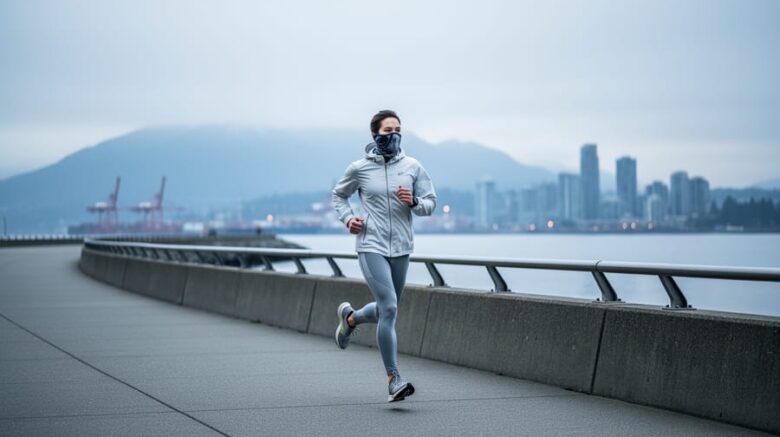
Vancouver’s air quality is measured by Environment Canada using the Air Quality Health Index (AQHI), a system that categorizes health risk into four levels and helps residents make informed decisions about outdoor activities. Whether you’re planning a morning jog along the seawall or deciding if your kids should play outside after school, understanding these risk categories gives you the tool to protect your health while staying active.
The AQHI translates complex atmospheric data into simple guidance. At Low Risk (1-3), air quality is ideal for all outdoor activities. Moderate Risk (4-6) means most people can continue their routines, though you should slow down if you notice coughing or throat irritation. High Risk (7-10) calls for reducing strenuous exercise outdoors if symptoms appear. Very High Risk (above 10) requires cutting back on intense outdoor activities, particularly for sensitive groups.
Vancouver’s coastal location creates unique air quality patterns. Wind carries pollutants from wildfires, industrial areas, and traffic corridors, while ocean breezes can quickly clear the air or trap emissions against the mountains. This variability means conditions can shift within hours, making real-time monitoring essential rather than optional.
Check current AQHI values and forecast maximums on British Columbia’s official air quality page before heading outdoors. The index updates regularly and provides location-specific readings across the Lower Mainland. Taking two minutes to review today’s air quality protects your respiratory health and helps you choose the right time for outdoor plans.
What’s Happening with Vancouver’s Air Quality
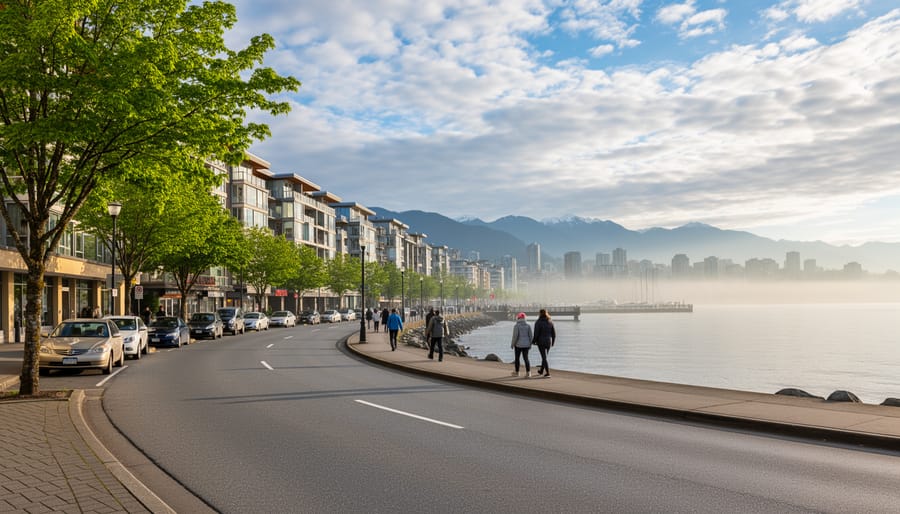
Vancouver’s air quality monitoring relies on a comprehensive network managed by Environment Canada, which provides real-time conditions, forecasts, and health advisories for coastal British Columbia. The Air Quality Health Index (AQHI) system translates complex pollutant measurements into a single number that reflects health risk, making it easy for residents to understand current conditions at a glance. You can check current values and forecast maximums on the Environment Canada BC AQHI page, which updates throughout the day as conditions change.
The index runs from 1 (low risk, ideal conditions) to 10+ (very high risk, requiring activity modifications). How AQHI is calculated involves combining measurements of ozone, nitrogen dioxide, and fine particulate matter into a health-based scale. Unlike simple pollutant readings, this approach focuses on what matters most: how the air affects you. The system includes specific health messages for each risk level, telling general population and at-risk groups when they can enjoy usual activities and when they should modify outdoor plans.
Environment Canada updates AQHI values hourly and issues forecasts showing expected maximums for the current day and following day. This forward-looking approach helps you plan morning runs, outdoor work, or kids’ sports practices before conditions change. The monitoring network covers Vancouver and surrounding coastal communities, giving you localized information rather than a single reading for the entire region.
How Wind Patterns Shape Coastal BC Air Quality

Vancouver’s coastal location creates a unique interplay between wind, topography, and air quality. The region sits where the Pacific Ocean meets the Coast Mountains, forming natural channels that funnel air masses and determine how pollutants move through the area.
Prevailing winds in coastal BC typically blow from the west and southwest, bringing marine air from the Pacific. These ocean breezes generally carry cleaner air and help disperse local pollutants from traffic, industry, and residential sources. When westerly winds dominate, Vancouver often experiences good air quality as emissions get pushed inland and diluted.
The situation shifts when wind patterns change. Winds from the north or northeast can push air down mountain valleys, sometimes carrying smoke from inland wildfires or trapping pollutants against the coastal range. The Fraser Valley acts as a natural corridor, and easterly winds can channel air from the interior directly into Metro Vancouver.
Temperature inversions complicate this dynamic. During calm periods with light winds, cooler air can settle near the surface while warmer air sits above, creating a lid that traps pollutants close to ground level. The mountains surrounding Vancouver amplify this effect, forming a basin where emissions accumulate until stronger winds or changing weather breaks the inversion.
Topography shapes how smoke moves through the region. Wildfire smoke travelling from the interior must navigate mountain passes and valleys. Depending on wind direction and strength, smoke can flow along these natural pathways, concentrate in sheltered areas, or disperse rapidly over the ocean. Understanding these patterns helps residents anticipate when air quality might deteriorate and when conditions will improve as cleaner marine air returns.
Understanding the Air Quality Health Index Levels
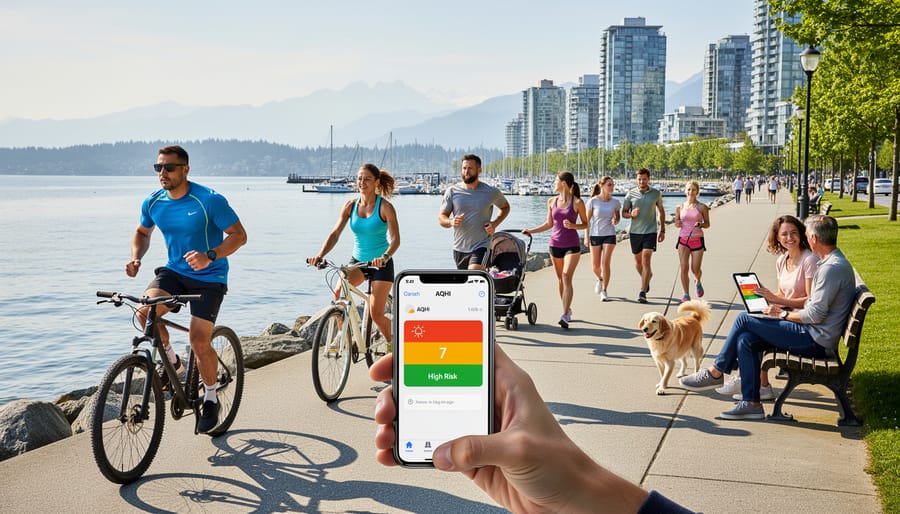
1. Low Risk (1-3): Ideal Conditions
When the AQHI reads between 1 and 3, Vancouver residents can step outside with confidence. These Low Risk conditions represent ideal air quality for any outdoor activity, from morning runs along the seawall to afternoon cycling in Stanley Park. The general population faces no need to modify plans or take precautions.
During Low Risk periods, the air contains minimal concentrations of ground-level ozone, particulate matter, and other pollutants. Coastal winds typically help maintain these optimal conditions by dispersing emissions and preventing pollutant buildup. Understanding AQHI wind impacts explains why Vancouver often experiences better air quality than inland communities, though conditions can shift when weather patterns change or wildfire smoke arrives from interior regions.
2. Moderate Risk (4-6): Watch for Symptoms
When the AQHI reads between 4 and 6, Vancouver’s air quality sits in the Moderate Risk range. For most residents, this means business as usual, you can continue your regular outdoor activities without special precautions. The key is listening to your body. If you start coughing or notice throat irritation during exercise or outdoor work, that’s your signal to ease up or move indoors for a bit. Otherwise, no adjustments are necessary. This level typically occurs during light wildfire smoke drift or moderate urban pollution days, when air quality has degraded slightly from ideal but hasn’t reached concerning levels for the general population.
3. High Risk (7-10): Reduce Strenuous Activity
When the Air Quality Health Index climbs into the High Risk range of 7 to 10, Vancouver residents should adjust their outdoor plans based on how their body responds. The official guidance is straightforward: reduce or reschedule strenuous activities outdoors if you experience symptoms such as coughing and throat irritation.
This level doesn’t require everyone to stay inside. If you’re cycling, running, or doing yard work and feel fine, you can continue. But if you notice your throat getting scratchy or you start coughing, that’s your signal to dial back the intensity or move your workout indoors. Strenuous exercise makes you breathe harder and deeper, pulling more pollutants into your lungs, so listening to your body at these levels protects your respiratory system when the air quality deteriorates.
4. Very High Risk (Above 10): Minimize Exposure
When air quality reaches Very High Risk levels (above 10 on the AQHI), Environment Canada recommends that everyone, not just sensitive groups, reduce or reschedule strenuous outdoor activities, particularly if experiencing symptoms like coughing or throat irritation. At this threshold, the air contains enough pollutants to affect healthy individuals during exertion.
Shift intense workouts, running, cycling, or yard work indoors or to a later date when conditions improve. Check the official AQHI forecast before planning outdoor commitments, and pay attention to how your body responds. Children playing sports and adults exercising should monitor for respiratory symptoms and take breaks as needed, even if they feel fine initially.
Why Coastal Air Quality Monitoring Matters
Tracking air quality in Vancouver isn’t just about checking a number, it directly affects how residents plan their day and protect their health. When pollutant levels rise, even healthy adults can experience coughing and throat irritation during outdoor exercise. Children, older adults, and people with respiratory conditions face heightened risk, making real-time AQHI monitoring essential for informed decisions about outdoor activities.
Beyond immediate health concerns, consistent air quality awareness reveals broader patterns. Vancouver’s coastal location means wind patterns play a significant role in pollutant dispersion. When wildfire smoke drifts from interior regions or industrial emissions concentrate during calm periods, understanding these dynamics helps communities prepare. Long-term exposure to poor air quality correlates with increased respiratory illness, cardiovascular problems, and reduced quality of life across all age groups.
Renewable energy development offers a path toward sustained air quality improvement. Traditional fossil fuel combustion, whether from vehicles, heating systems, or power generation, releases particulates and gases that degrade air quality. Wind energy, by contrast, produces zero operational emissions. As British Columbia expands its wind power capacity, each megawatt-hour generated by wind turbine types displaces electricity that might otherwise come from emission-producing sources.
The connection extends beyond power generation. Cleaner electricity enables broader electrification of transportation and building systems, further reducing the pollutant sources that affect coastal air quality. While wind conditions determine when turbines generate power, their cumulative contribution over time measurably reduces the emissions load that Vancouver’s atmosphere must process. Monitoring air quality today while investing in renewable infrastructure creates healthier conditions for future generations.
What to Watch and How to Stay Informed
Environment Canada operates a comprehensive monitoring network that tracks air quality conditions across coastal British Columbia. Official Environment Canada tools provide current AQHI values, forecast maximums, and weather models that help predict how conditions may shift over the coming days. The website displays real-time measurements alongside forecast highs for each monitoring station, allowing you to check both current readings and expected peak values.
Beyond basic AQHI numbers, the platform offers complementary data that influences air quality interpretation. Weather RADAR shows precipitation patterns that can wash pollutants from the atmosphere, while wind forecasts indicate whether coastal breezes will push smoke inland or out to sea. UV index readings appear alongside AQHI values because both affect outdoor activity planning, especially during summer months when wildfire smoke effects combine with intense sunlight.
How often should I check the AQHI?
Check morning forecasts before planning outdoor activities, and refresh during the day if you notice haze, reduced visibility, or symptom onset.
What’s the difference between current and forecast AQHI?
Current values show conditions right now at monitoring stations, while forecast maximums predict the highest level expected in the next 24-48 hours.
Do I need to check multiple locations?
Yes, if you live in one area but work or exercise in another, coastal stations often show different readings than inland neighbourhoods.
Set up alerts through provincial air quality programs if you have respiratory conditions or exercise outdoors regularly. These notifications arrive when AQHI levels cross into High or Very High categories, giving you advance warning to adjust plans. Compare readings from multiple coastal stations if you travel between neighbourhoods, since localized wind patterns can create significant variation across the metro area within the same hour.