
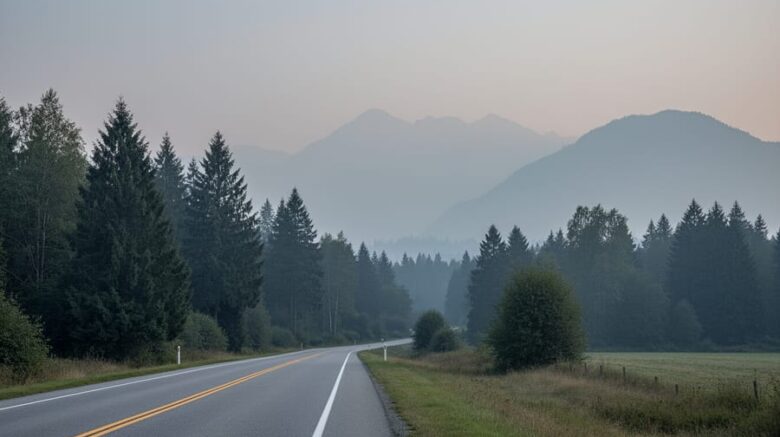
As of 5:00 PM PDT on August 30, 2026, Chilliwack’s Air Quality Health Index sits at 2 (Low Risk), meaning outdoor activities are safe for most residents. This is a significant improvement from the alarming AQHI 10+ rating that blanketed Chilliwack, Agassiz, and Hope on August 13 during this summer’s wildfire season.
If you’re checking air quality right now, you need to know where to find real-time readings. Environment Canada’s provincial air quality monitoring network provides hourly AQHI updates through their official website and mobile app, while the Fraser Valley Regional District publishes local PM 2.5 readings specific to the Eastern Fraser Valley. These tools are essential during wildfire season, when conditions can shift within hours.
The current PM 2.5 concentration in Chilliwack is 1.2 times the World Health Organization’s annual guideline, low enough for unrestricted outdoor activity but still worth monitoring if you have respiratory sensitivities. The AQHI scale runs from 1 to 10+, with readings above 7 triggering health advisories for vulnerable groups and readings at 10+ requiring most people to limit or reschedule outdoor activities.
Understanding how to interpret these numbers and knowing when to adjust your routine protects your health during smoke events. This guide shows you how to access current readings, explains what each AQHI level means for your daily plans, and outlines steps you can take to reduce pollution exposure when air quality deteriorates.
Current Air Quality Status in Chilliwack
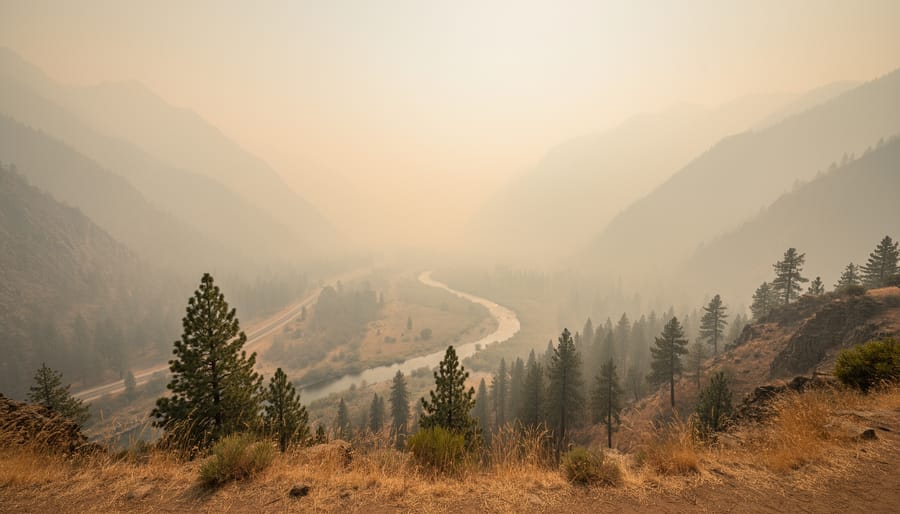
As of 5:00 PM PDT Sunday, August 30, 2026, Chilliwack’s Air Quality Health Index stands at 2, classified as Low Risk. The corresponding Air Quality Index rating is Good, meaning the air poses minimal health concerns for the general population. You can safely continue your normal outdoor activities without worry.
Current PM2.5 concentration measures 1.2 times the World Health Organization’s annual guideline value. While this exceeds the WHO’s long-term target, it represents a significant improvement from recent conditions and falls within the Low Risk category on the AQHI scale.
A Low Risk AQHI of 2 means the combined health effects of nitrogen dioxide, ground-level ozone, and fine particulate matter are minimal right now. For most Chilliwack residents, this translates to no meaningful health impact from outdoor air. You don’t need to adjust your plans, cancel sports practices, or limit time outside. Children, seniors, and people with respiratory or heart conditions can participate in typical outdoor activities without additional precautions.
This favorable reading marks a stark contrast to the very high risk conditions that blanketed the area just 17 days ago on August 13, when Chilliwack, Agassiz, and Hope all registered AQHI readings of 10+ during an air quality warning for elevated PM2.5. Today’s low reading demonstrates how quickly conditions can shift in the Fraser Valley, particularly as wildfire smoke clears.
How to Check Real-Time Air Quality in Chilliwack
Staying informed about air quality starts with knowing where to look. The Environment Canada AQHI page provides the most authoritative real-time readings for Chilliwack. Visit and select British Columbia, then navigate to the Fraser Valley region to find Chilliwack’s current AQHI value, updated hourly throughout the day. The page displays the numerical rating (1-10+), the corresponding risk category, and recent trends.
For provincial alerts and broader context, check the BC government’s air quality advisories at . This site issues region-specific warnings during wildfire smoke events or elevated pollution episodes, like the orange alert issued for the Eastern Fraser Valley when PM2.5 levels spiked in mid-August. You’ll find detailed pollutant breakdowns, health recommendations, and forecast outlooks for the next 24 to 48 hours.
Mobile apps such as AirVisual, BreezoMeter, and the official WeatherCAN app (from Environment Canada) deliver push notifications when conditions deteriorate. These tools overlay air quality maps that show real-time readings across the Fraser Valley, making it easy to compare Chilliwack with neighboring communities like Abbotsford or Hope.
Check these resources during wildfire season (typically June through September), on visibly smoky days, or if you or your family have respiratory or cardiovascular sensitivities. Look for three key pieces of information: the current AQHI number, the dominant pollutant (usually PM2.5 during smoke events), and any active advisories. Hourly updates mean conditions can improve or worsen quickly, so refresh the data before heading outside for exercise or prolonged activities.
Understanding the Air Quality Health Index (AQHI)
The Air Quality Health Index is a nationally standardized tool that translates complex atmospheric measurements into a simple health-risk number you can act on. What AQHI means for Chilliwack residents: the index combines three key pollutants, nitrogen dioxide (NO2) from vehicle exhaust and combustion, ground-level ozone (O3) that forms when pollutants react in sunlight, and fine particulate matter (PM2.5) from smoke and emissions, into a single scale that reflects their collective impact on your health, not just how much pollution is present.
The AQHI runs from 1 to 10+, divided into four risk categories that tell you how outdoor air may affect you right now. Low risk (1-3) means air quality poses little concern for most people. Moderate risk (4-6) suggests sensitive individuals should consider reducing prolonged outdoor activity. High risk (7-10) calls for everyone to scale back strenuous exercise outdoors. Very high risk (10+), like the August 13 event in Chilliwack, means even healthy adults should avoid intense outdoor work and play.
| AQHI Range | Risk Category | Health Guidance |
|---|---|---|
| 1-3 | Low | Ideal conditions for outdoor activities |
| 4-6 | Moderate | Sensitive groups consider reducing prolonged exertion |
| 7-10 | High | General population reduce strenuous activity |
| 10+ | Very High | Everyone avoid intense outdoor exertion |
In BC, the AQHI is maintained through a partnership of Environment Canada, Health Canada, the BC Ministry of Environment and Parks, the BC Ministry of Healthy Living and Sport, the BC Ministry of Health Services, Metro Vancouver, the BC Lung Association, and the Fraser Valley Regional District. This coalition ensures readings reflect both national air quality standards and the unique geographic and health concerns of the Fraser Valley, where pollution can concentrate in valleys and seasonal wildfire smoke dramatically shifts risk categories within hours.
Recent Air Quality Events: August 13 Spike to Very High Risk
On Thursday, August 13, 2026, Chilliwack experienced its most severe air quality episode of the summer when the AQHI spiked to 10+, the highest possible rating indicating very high health risk. Agassiz and Hope recorded the same extreme reading that day as wildfire smoke blanketed the Eastern Fraser Valley. Health authorities issued an orange warning for elevated PM2.5 levels across the region, advising residents to limit outdoor activities and keep vulnerable populations indoors.
The rapid deterioration caught many by surprise. While Chilliwack’s air quality has since returned to low risk levels, the August 13 event demonstrates how quickly conditions can shift from safe to hazardous during wildfire season. Smoke from active fires combines with the valley’s geography, mountains on both sides trap pollutants close to ground level, creating what meteorologists call stagnant air episodes. When weather patterns prevent dispersal, fine particulate matter accumulates, sometimes reaching dangerous concentrations within hours.
These sudden spikes underscore why checking AQHI readings regularly matters during summer and early fall. A clear morning can turn hazy by afternoon as wind patterns shift or new smoke plumes arrive. The difference between low risk and very high risk can develop faster than many residents expect.
Health Recommendations by AQHI Risk Level
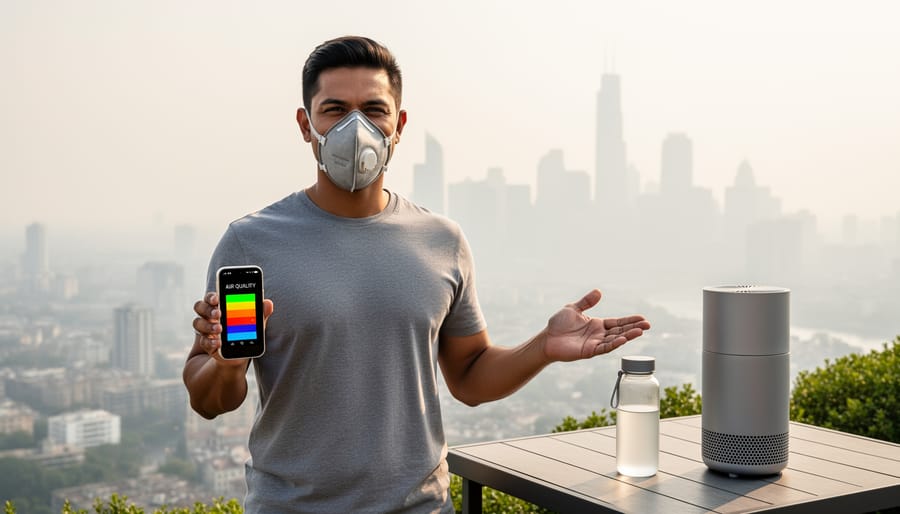
Understanding what each AQHI category means for your daily activities helps you protect your health when conditions change.
At Low Risk (1-3), like Chilliwack’s current reading of 2, air quality poses minimal concern. You can maintain your regular outdoor routine, including vigorous exercise, hiking in the valley, or children’s sports. No special precautions are necessary for the general population or sensitive groups.
When AQHI climbs to Moderate (4-6), most people can continue normal activities, but those with heart or lung conditions may notice symptoms during prolonged, strenuous exertion. Consider scheduling intense workouts for early morning when pollutant concentrations are typically lower, and watch for coughing, shortness of breath, or chest tightness.
High Risk levels (7-10) require more caution. Reduce or reschedule demanding outdoor activities if you have asthma, COPD, cardiovascular disease, or are elderly. Parents should monitor children closely during outdoor play, as kids breathe faster and inhale more air per pound of body weight. The general population can still be active but should scale back intensity and duration.
During Very High Risk episodes (10+), like the August 13 spike in Chilliwack, avoid strenuous outdoor activities altogether if you’re in a sensitive group. Stay indoors with windows closed, run air purifiers if available, and postpone yard work or exercise until conditions improve. Everyone, regardless of health status, should minimize outdoor exertion and watch for symptoms like eye irritation, headaches, or breathing difficulty that signal you need to get inside.
What Affects Air Quality in Chilliwack and the Fraser Valley

Chilliwack’s location in the Fraser Valley creates unique air quality challenges. The valley’s geography acts like a bowl, trapping pollutants between mountain ranges when atmospheric conditions are calm. This natural topography means emissions don’t disperse as quickly as they would in open terrain, allowing concentrations to build up during stagnant weather.
Wildfire smoke is the dominant summer concern. During fire season, smoke from the BC interior, Okanagan, or even distant Washington and Oregon fires can blanket the valley for days. The recent August 13 spike to AQHI 10+ demonstrated how rapidly wildfire smoke effects can escalate. These events overwhelm baseline pollution with fine particulate matter (PM2.5) from burning vegetation and structures.
Winter brings different patterns. Temperature inversions, where warm air traps cooler air near the ground, prevent pollutants from rising and dispersing. Wood smoke from residential heating, vehicle exhaust, and agricultural burning accumulate in this trapped layer.
Year-round pollutants include PM2.5 from vehicle combustion, industrial operations, and residential wood burning. Nitrogen dioxide from traffic contributes to the AQHI calculation, particularly along Highway 1 and in urban areas. Agricultural activities, including dust from tilling and ammonia from livestock operations, add seasonal variability.
The valley’s prevailing winds typically bring cleaner marine air from the west, but easterly flows during certain weather patterns can push polluted air from Metro Vancouver upvalley, compounding local sources.
Reducing Your Contribution to Air Pollution
While we can’t control wildfire smoke or weather patterns, Chilliwack residents can take practical steps year-round to reduce local air pollution and protect the baseline air quality between smoke events.
Transportation choices make a measurable difference. Turn off your engine if you’re stopped for more than 10 seconds, whether waiting at a school pickup or a drive-through. Consider carpooling, cycling, or walking for short trips under 5 km, which account for roughly half of urban vehicle journeys but produce disproportionate cold-start emissions. During winter inversions, when valley geography traps pollutants close to the ground, reducing unnecessary driving helps everyone breathe easier.
Residential wood burning contributes significant PM2.5 during cold months. If you heat with wood, use only dry, seasoned fuel, maintain your stove properly, and skip recreational fires when air quality is already moderate or worse. Even small improvements in combustion efficiency cut particle emissions.
Home energy conservation reduces demand on the grid, which in BC still includes some fossil fuel generation during peak periods. Simple upgrades like LED lighting, improved insulation, and programmable thermostats lower your footprint. Supporting renewable energy installations, whether rooftop solar or community wind projects, strengthens the clean energy mix that benefits air quality long-term without the heavy climate advocacy that overshadows immediate health concerns.
These actions won’t prevent the next wildfire smoke event, but they reduce the pollutant load during clear periods and demonstrate how individual choices aggregate into cleaner community air.
Frequently Asked Questions
How often is the AQHI updated?
Environment Canada calculates and publishes AQHI readings hourly based on continuous air quality monitoring. During wildfire season or poor air quality events, check for updates every hour to track changing conditions.
Is it safe to exercise outdoors at Low Risk?
Yes, at Low Risk (AQHI 1-3) the general population can enjoy normal outdoor activities without restrictions. Even people with respiratory or cardiovascular conditions can typically maintain their regular exercise routines at this level.
What’s the difference between AQI and AQHI?
The Air Quality Index (AQI) used in the United States measures individual pollutant concentrations on a 0-500 scale. The AQHI, used in Canada, combines the health risks from nitrogen dioxide, ozone, and fine particulate matter into a simpler 1-10+ scale that directly reflects health impact.
When should I keep windows closed?
Close windows when AQHI reaches Moderate Risk (4-6) if someone in your household has respiratory sensitivities, and keep them closed for everyone at High Risk (7-10) or Very High Risk (10+). You can safely open windows again once readings return to Low Risk.
Where can I find air quality forecasts for the next few days?
Environment Canada’s Air Quality Health Index page provides forecasts for today and tonight. The BC government’s air quality advisories page issues advance warnings when smoke or other pollution events are expected to affect the Fraser Valley region.
These answers address the most common concerns for Chilliwack residents monitoring local air quality. Regular monitoring becomes especially important during summer wildfire season when conditions can shift from Low Risk to Very High Risk within hours, as happened on August 13 when readings spiked to 10+. Bookmarking official monitoring pages helps you respond quickly when air quality deteriorates.